.jpg)


English



Faced with peaks of over 6,000 visitors per day in the summer, the municipality of Île-de-Bréhat equipped itself with Verdilo counters in April 2022 to objectively measure pedestrian traffic. This data served as the foundation for a municipal decree establishing a summer quota of 4,700 visitors per day, a regulation that has now been in place for several seasons.

Project owner: Municipality of Île-de-Bréhat
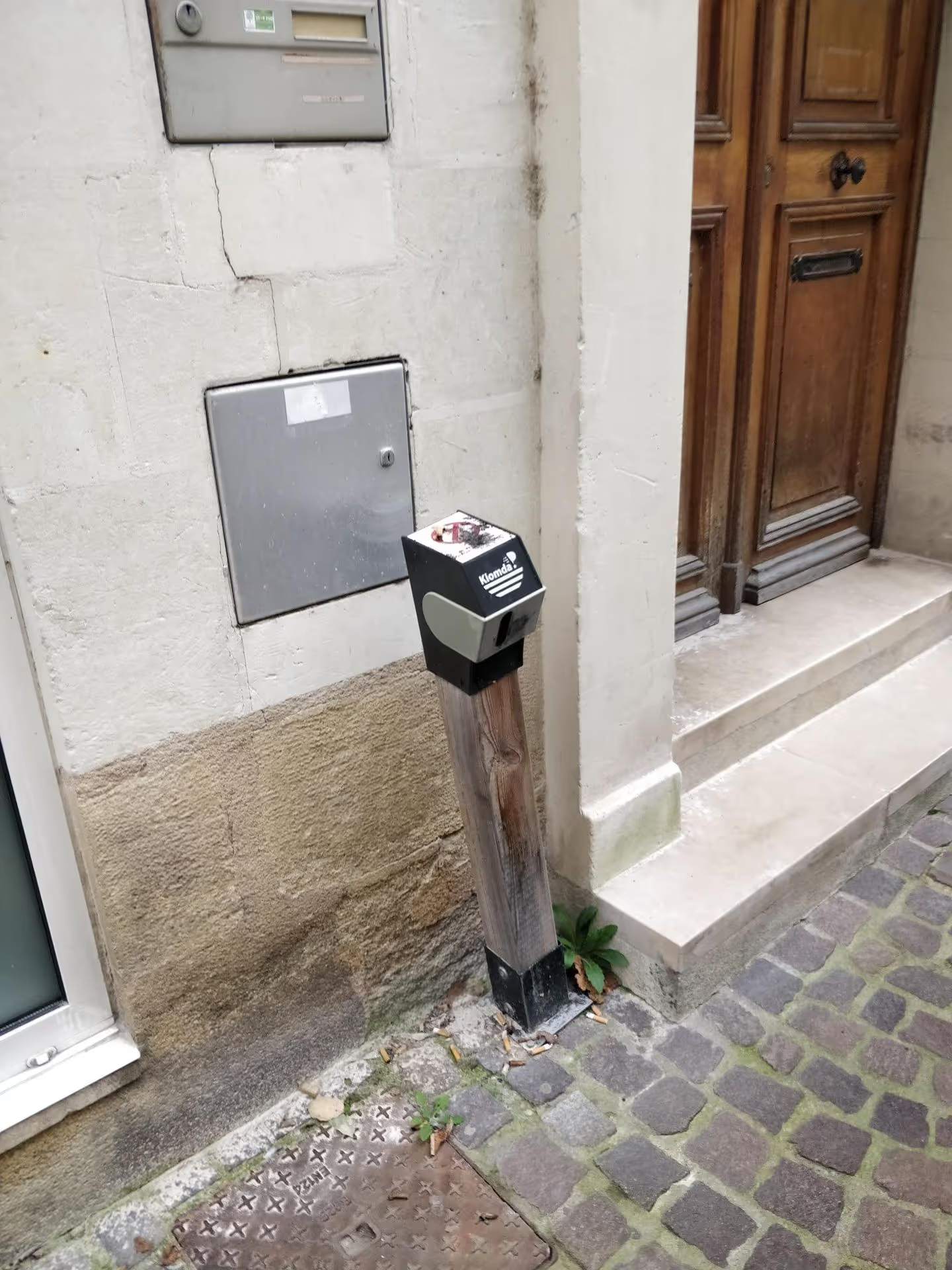
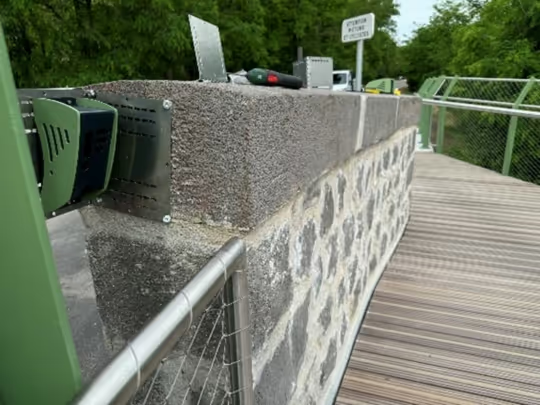
6 simple, practical pedestrian units ordered in April 2022 (5 currently active), installed without protective covers
Location: northern island, Paon lighthouse, port
Over 320,000 passages recorded between May and September 2022
Data supporting a municipal decree (Climate and Resilience Law): quota of 4,700 visitors/day, Monday to Friday, 8:30 a.m.–2:30 p.m.
Data for strictly internal use (municipal officials), not publicly released
Nicknamed the "Island of Flowers," the island of Bréhat combines pink granite with a mild microclimate that encourages the growth of agapanthus, eucalyptus, and mimosa—all without any car traffic, except for service vehicles. With its 3.09 km² and approximately 400 year-round residents, it is not sized to absorb peak traffic exceeding 6,000 visitors in a single summer day. Faced with the saturation of its infrastructure and risks to its ecosystem, the municipality began a quantification process in 2021-2022 before making any regulatory decisions.
In April 2022, six pedestrian counters were ordered and installed "bare," without anti-vandalism protective covers, distributed between the northern island, the Paon lighthouse, and the port—five of which are currently active. Combined with silhouette-counting cameras and thermal sensors at the Port Clos landing stage, they recorded over 320,000 passages between May and September 2022, supplemented by field surveys of visitors and residents. The assessment revealed that a majority of Bréhatins supported flow regulation.
The challenge, the Director General of Services points out, went beyond mere environmental preservation: it also concerned public safety, on an island as saturated as the mainland. Based on these figures, the mayor issued a municipal decree, relying on the Climate and Resilience Law, setting a summer quota of 4,700 visitors per day, from Monday to Friday between 8:30 a.m. and 2:30 p.m.—a first for a municipality of this type, before other fortified villages began similar processes.
The data remains for strictly internal use. It was first used to objectively identify days of actual high traffic: contrary to popular belief, weekdays turn out to be busier than weekends, as weekend tourists manage their bookings in advance; the third Friday of August now stands out as an identified peak, as does the month of May, which is very busy but unregulated.
Regulation has since made it possible to smooth out flows without reducing overall attendance—"there aren't fewer people (...) but it's better distributed, so there's less nuisance"—including on the mainland, where road safety issues linked to the influx toward the L'Arcouest headland (illegal parking, pedestrian traffic on the road) are also better managed. The figures have also been used to counter criticism: more than 82,000 passages were recorded in July, a piece of data deemed useful even if "the algorithm isn't perfect," because it remains comparable from one year to the next.
"Being able to prove that visitor numbers remain stable for professionals has been very important."
.jpg)



.svg)





.avif)