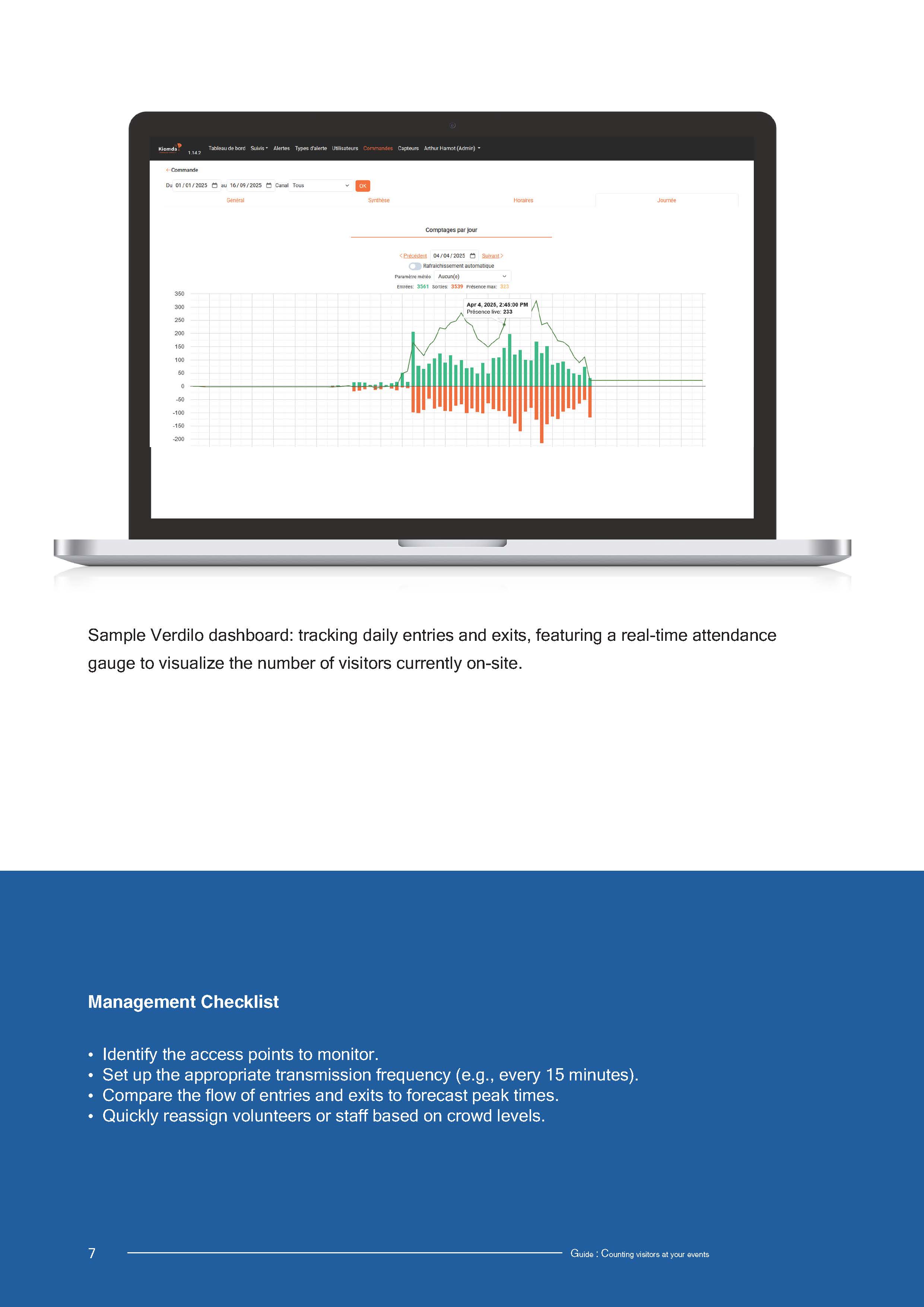
Counting the number of visitors to an event is not a communication “bonus”. It is a control data that is used both to secure accesses, to adapt the organization in real time, and to objectifying value of the event with partners (local authorities, sponsors, sponsors, funders, media). The key point: you are not only looking for a total at the end of the day, but a reliable vision of attendance At every moment, and sometimes a presence gauge from entrances/exits. This guide was designed to be directly operational, with checklists and examples from real events.
This white paper is primarily aimed at:
The guide recalls a simple reality: organizing an event implies a strong responsibility towards the public, and the authorities expect a system capable of producing figures reliable (no estimates), trackable and archivable. In the event of an inspection, you must be able to demonstrate that you are in control of your gauge and flows.
Two practical lessons come from this:
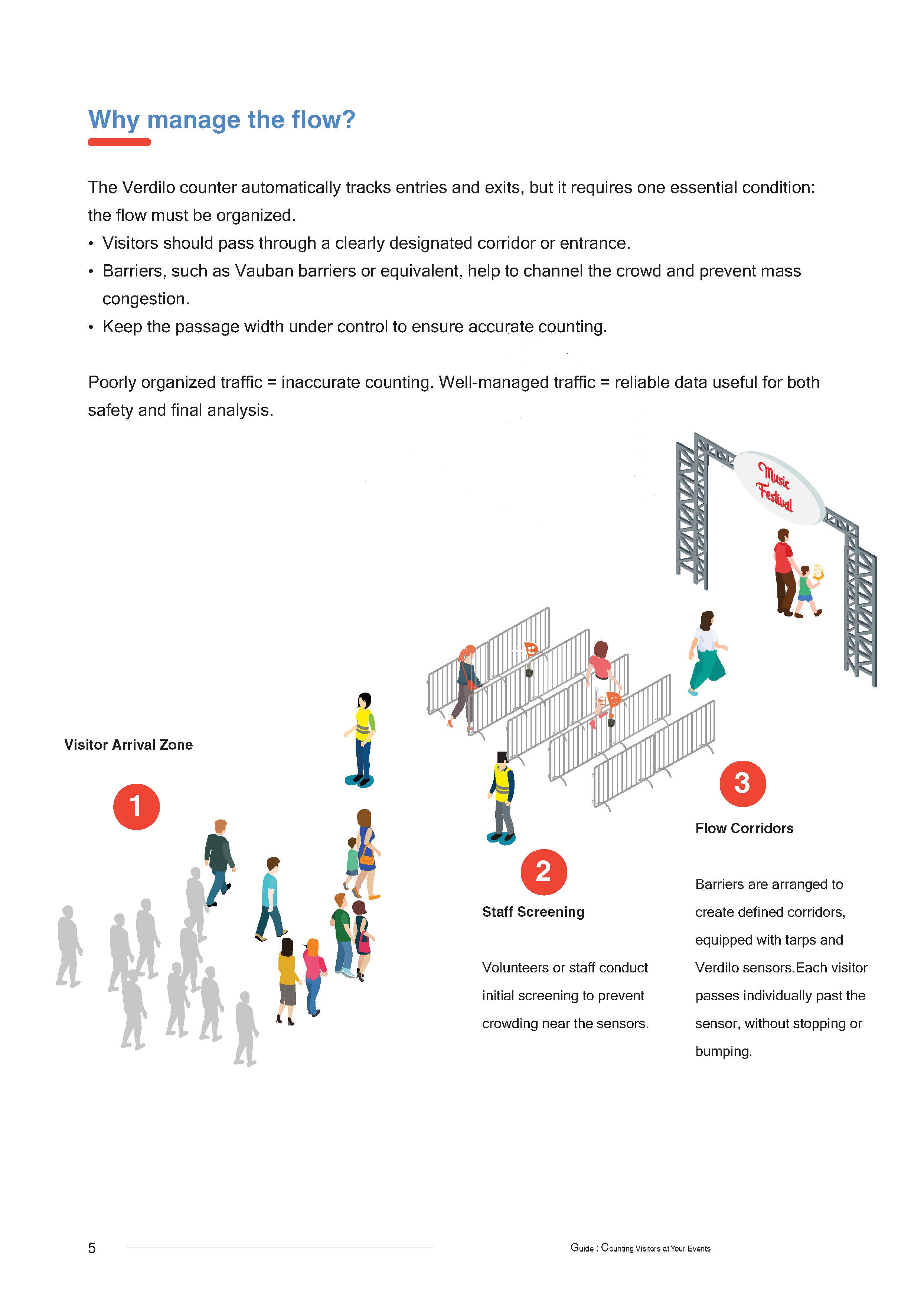
The guide insists on an essential condition: A poorly organized flow makes counting inaccurate. To obtain a reliable measurement, visitors must pass through an identified entrance, in a materialized corridor, with a controlled width (Vauban type barriers or equivalent). This logic makes it possible to avoid the mass effect and to ensure that each passage is well detected.
Once the security constraint has been mastered, data becomes a strategic asset. The guide details the most frequent uses:
He also insists on the importance of having ready-to-use outputs: readable graphs, comparisons, quick reports, in order to feed your files and reports without requiring days of work.
What you are going to get

Discover how Kiomda measures attendance on natural sites, and which configurations are the most adapted to your challenges (flow, direction of counting, terrain constraints).

Discover how Kiomda measures attendance at events, and which configurations are the most adapted to your challenges (flow, direction of counting, field constraints).