English
Measure human pressure on natural environments, adjust management, anticipate erosion — no wiring required.







_logo_2015.svg)




















.svg.avif)


















Uses within a natural site are constantly evolving: changing weather conditions, irregular visitor flows, sensitive habitats, multiple access points. Without data, it is often difficult to know whether perceptions truly reflect on-the-ground reality.
Below are common situations — and how visitor monitoring provides concrete insights.
The actual wear of a trail depends on the number of passages, not its appearance.

It is not uncommon for trail usage to triple during a sunny weekend.
Secondary entrances or viewpoints can sometimes be more heavily used than expected.
Wetlands, protected zones, fragile habitats: decisions must be evidence-based.
Temporary closures, trail rerouting, boardwalk construction, funding requests.
Attendance dynamics evolve, sometimes subtly.
Designed for outdoor environments, without construction or wiring.


Battery-powered, no mains connection required. Estimated battery life: 2+ years.

Up and running in 2 minutes, no expertise needed, delivered ready to use.

Designed for outdoor conditions, in natural or urban environments.

No images stored, fully GDPR compliant.

Independently identifies pedestrians, cyclists and vehicles depending on configuration.

View data online or retrieve it manually in areas without connectivity.
Thermal technology: the sensor reads the body heat of each user. The magnetometer detects the passage of metallic elements. No cameras, no images, no personal data.
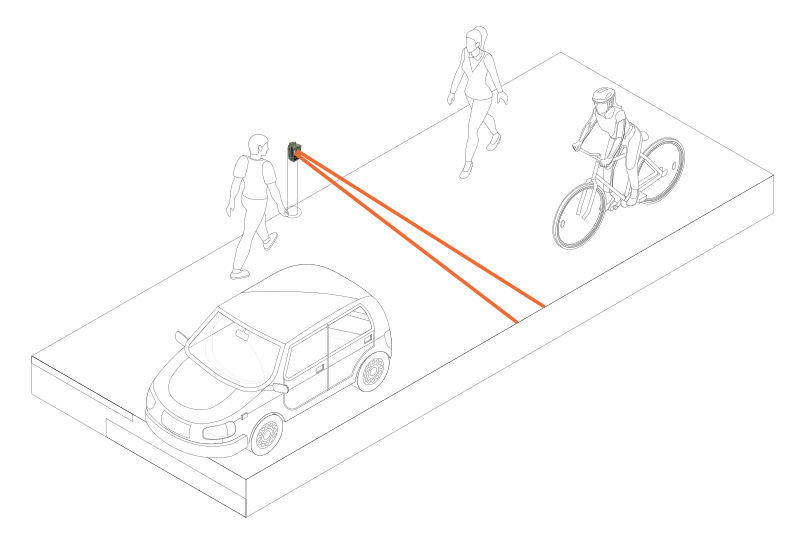
Each passage is timestamped and classified by mode and direction.
Data is aggregated into 15-minute intervals directly within the device.
Depending on the chosen frequency (from 5 minutes to 24 hours), the device sends its data via the available network.
If there's no network, local Wi-Fi data collection is still possible.
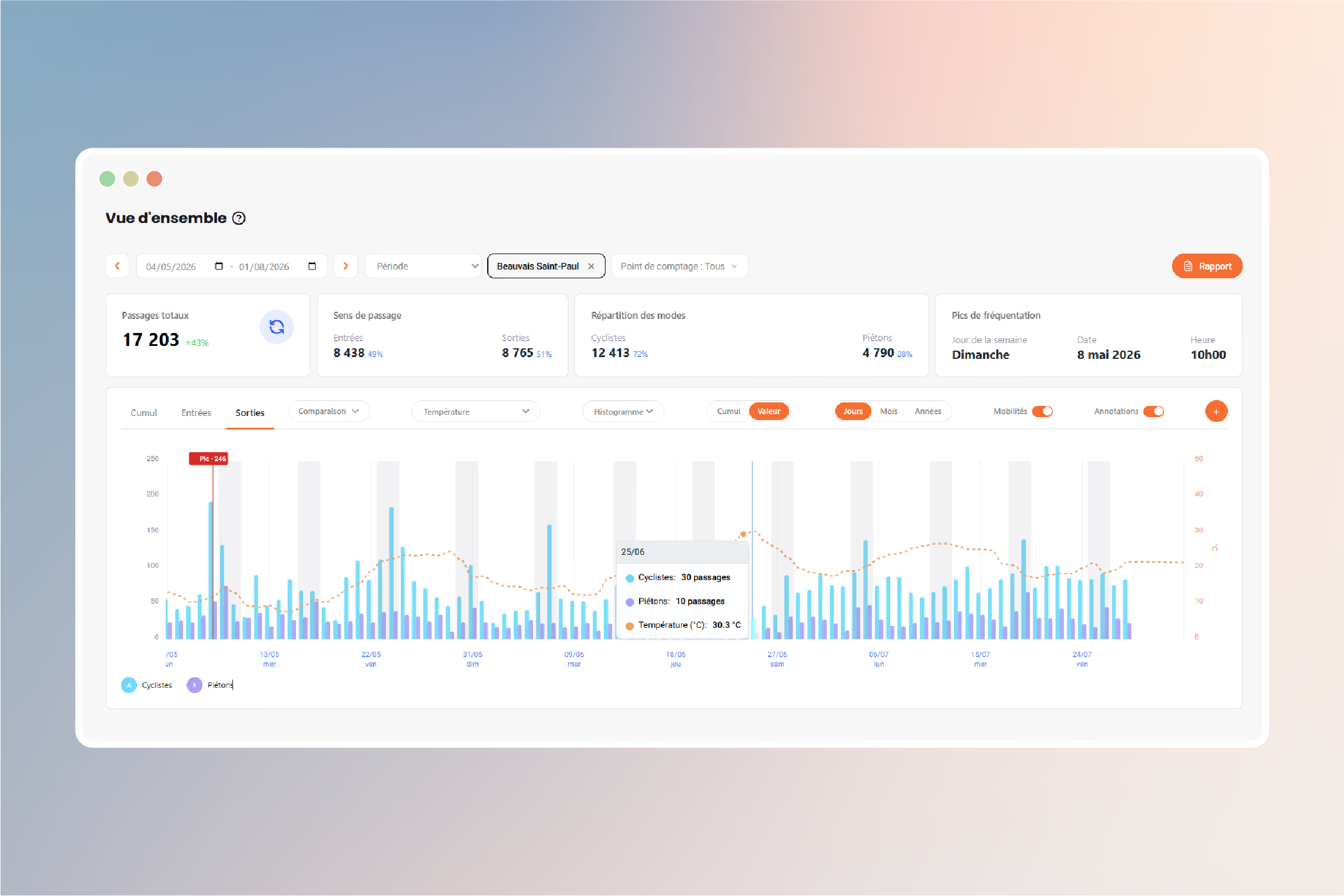
The Kiomda Report platform displays hourly curves, daily totals, and seasonal comparisons from any browser


The standard casing is weather-resistant and designed for outdoor use. Its sleek and discreet design blends naturally into urban and natural environments.


A reinforced, vandal-proof casing, perfectly suited for public areas. This model is designed to withstand all types of damage.


A birdhouse that blends into natural environments – ideal for nature reserves, parks, and protected areas.


A wooden post that completely conceals the sensor — ideal for greenways, rural paths, and heritage sites where visual impact must be minimal.


Case Studies
Regular visitor monitoring in natural areas transforms site management: it reveals actual usage patterns, supports planning decisions, and strengthens discussions with institutional partners.
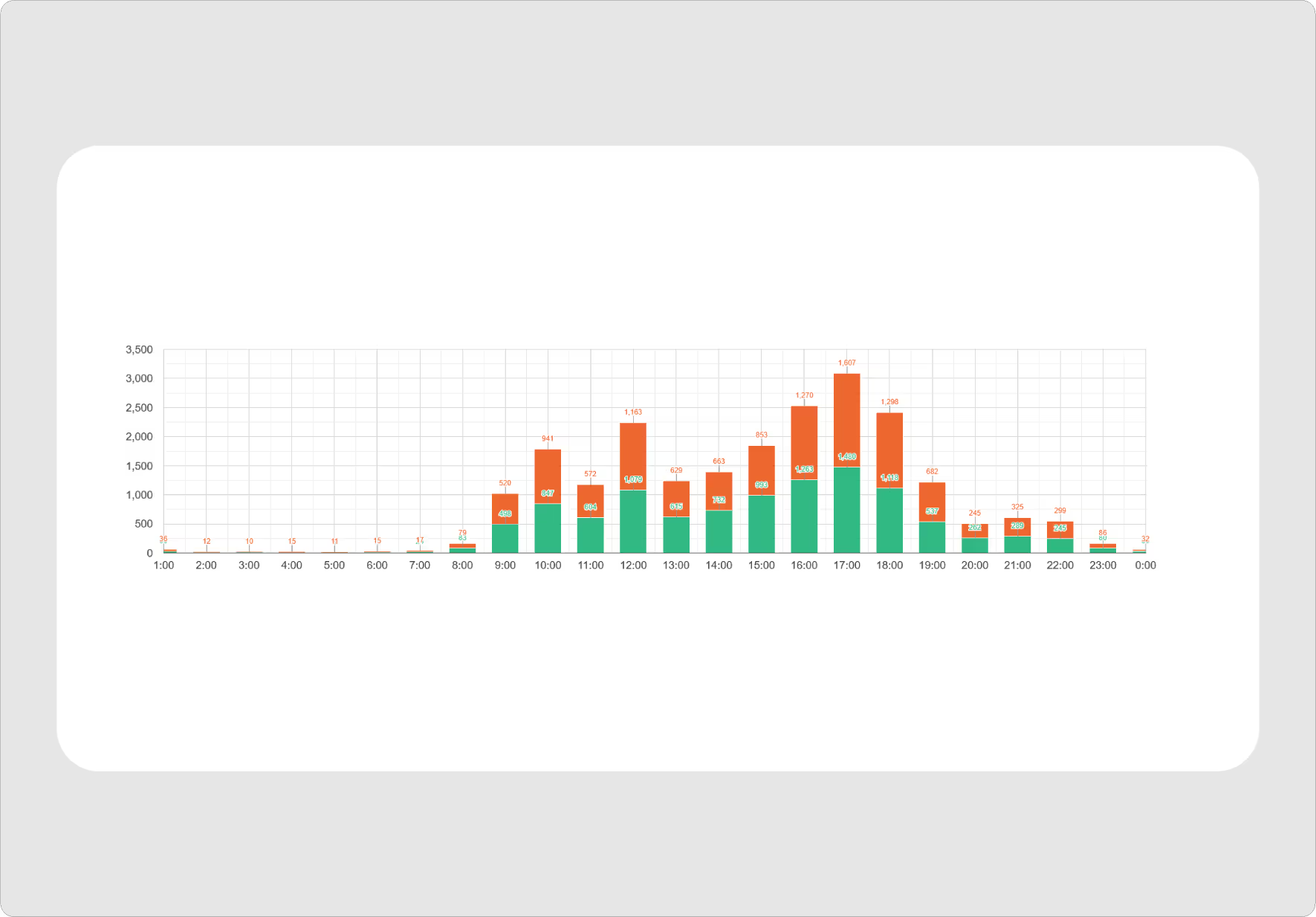

Analyse traffic volumes, seasonal variations, weather effects and peak usage on your routes. Identify heavily used sections, anticipate maintenance needs and track long-term changes in visitor pressure.

Objective data strengthens decisions: temporary closures, rerouting, boardwalk construction, infrastructure works. You gain concrete evidence to justify, plan and communicate in line with actual site usage.

Visitor indicators are essential for site management plans, regulatory compliance (ENS, Natura 2000 etc.) and funding applications. They provide a clear, consistent and recognised evidence base for public partners to evaluate your projects.

Choose the solution that fits your needs
Whether you require continuous monitoring or a one-off analysis, our visitor counting solutions adapt to your projects with turnkey services.

A long-term investment to continuously equip your sites and own your attendance data.
For local authorities and site managers with ongoing monitoring needs.

A turnkey solution for testing, piloting, or measuring attendance during a one-time event, starting from €500.
Ideal for one-off events (festivals, trade shows, sports competitions), pre-purchase tests/pilots, and seasonal needs.
Submit your request online. Our team will help you design a solution tailored to your site.
We configure your sensor to your specifications and ship it ready to use — no complex setup required.
Attach the sensor to the right location: post, tree, street furniture. No wiring or external power supply needed.
The collected data is sent every 12 hours to our secure platform (frequency adjustable on request), where it is analyzed and formatted.
Access detailed statistics and use our analysis tools to optimise your infrastructure and make data-driven decisions.

Each site is different — we help you choose the easiest and most reliable configuration.


Here we have put together the most frequently asked questions about our Verdilo counting solutions. If you can't find your answer, contact us directly
Yes, our sensors can distinguish between pedestrian and cyclist flows, even on shared lanes, in both directions.
Absolutely. Our data can help demonstrate a site’s usage and justify investments or upgrades in funding proposals to public authorities or partners.
Yes, we offer rental solutions starting from one day up to several months — perfectly suited for temporary events such as festivals, trade shows, performances, or one-off studies.
Not at all. Installation takes just two minutes — no power supply or civil works needed. The sensor can be mounted on a post, wall or integrated into a discreet housing (wooden post, street furniture, bird-box).
With default settings (data transmission every 12 hours), our counters are designed to operate for at least 2 years without external power. If you increase the transmission frequency, battery life will decrease due to higher energy consumption. This flexibility allows you to tailor the sensor’s operation to your needs while maintaining long-term performance.
By default, our sensors transmit data every 12 hours. This frequency can be adjusted on request. However, increasing the frequency reduces battery life. For locations without network access, we also offer a manual data collection solution — ensuring reliable tracking even in remote or offline areas.
Yes, our sensors are built to be robust, waterproof, and to operate in all weather conditions — rain, snow, or extreme temperatures.
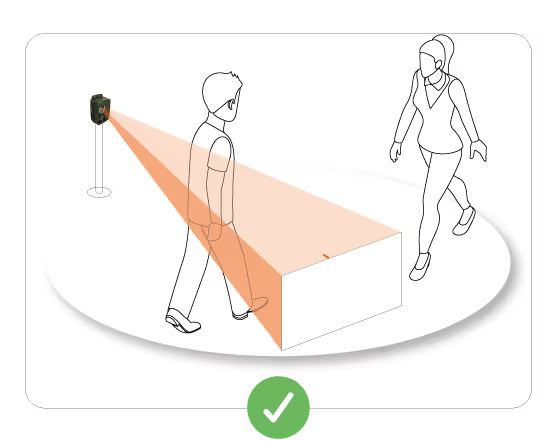
Yes, the Verdilo counter is designed to handle high traffic volumes and can accurately distinguish users even during crowded events. For optimal performance, we recommend placing the counter in a passage area where users are naturally filtered one by one (for example, near a barrier, gate, or controlled access point). Without such filtering, a group might be counted partially or as a single person. Proper positioning ensures accurate counting, even in busy conditions.
Yes, all data collected by our counters is 100% anonymized and compliant with data protection regulations, including the General Data Protection Regulation (GDPR). Verdilo uses thermal detection technology — not a camera. It does not capture images or collect personal data. The process is fully anonymous, with no way to identify individuals. Furthermore, no individual tracking is performed: only aggregated, quantitative data is transmitted.


.svg)