English
Optimise capacity, reduce congestion and improve user experience with flow data.











Local authorities, businesses, or infrastructure managers don't have the same challenges — but all need reliable data to make better decisions.

A public parking lot generates traffic depending on days, times, seasons, and events. Without measurement, decisions regarding capacity, signage, or access hours are based on estimates.


In a private parking lot, spaces are often poorly distributed between actual needs and assumed habits. Peak usage remains invisible without monitoring.

Waste disposal centers, stadiums, media libraries, multimodal hubs: these facilities attract intense motorized traffic during short, predictable periods — but this is rarely documented.
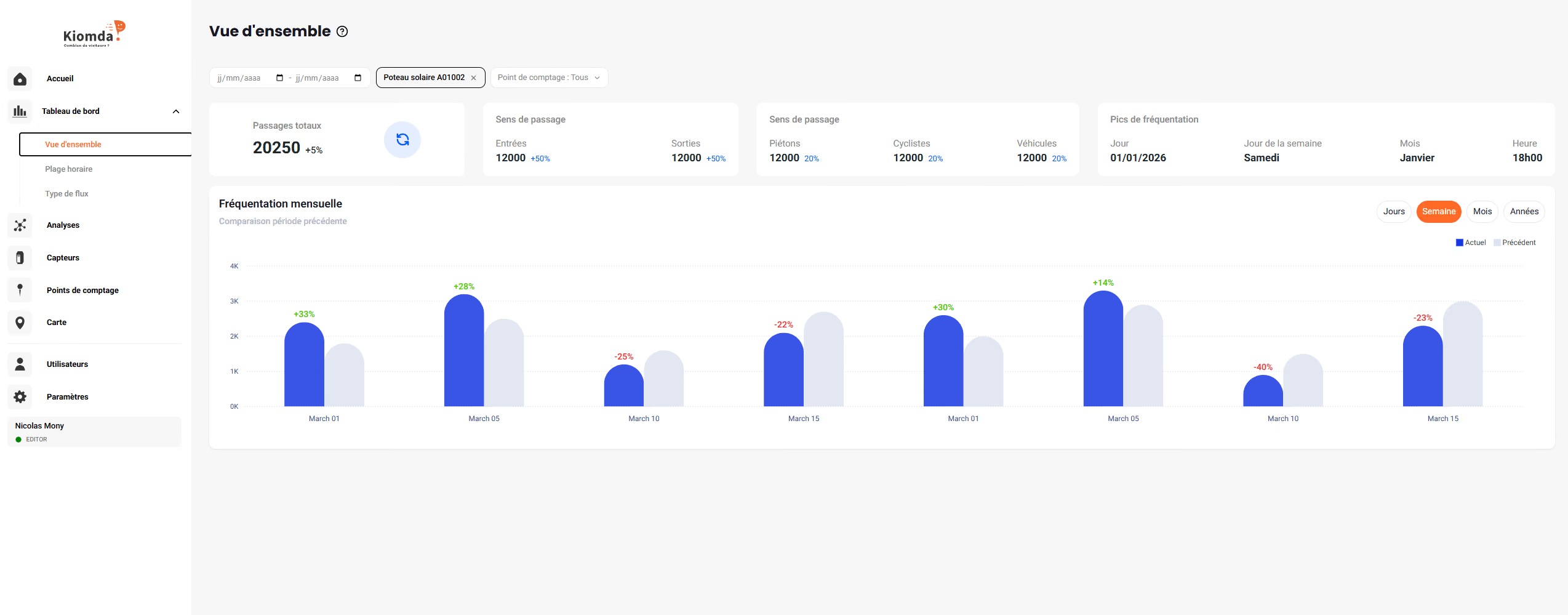
The platform continuously calculates the occupancy rate from detected entries and exits. You can visualize peak occupancy, off-peak hours, and the daily usage curve — without manual recounting.
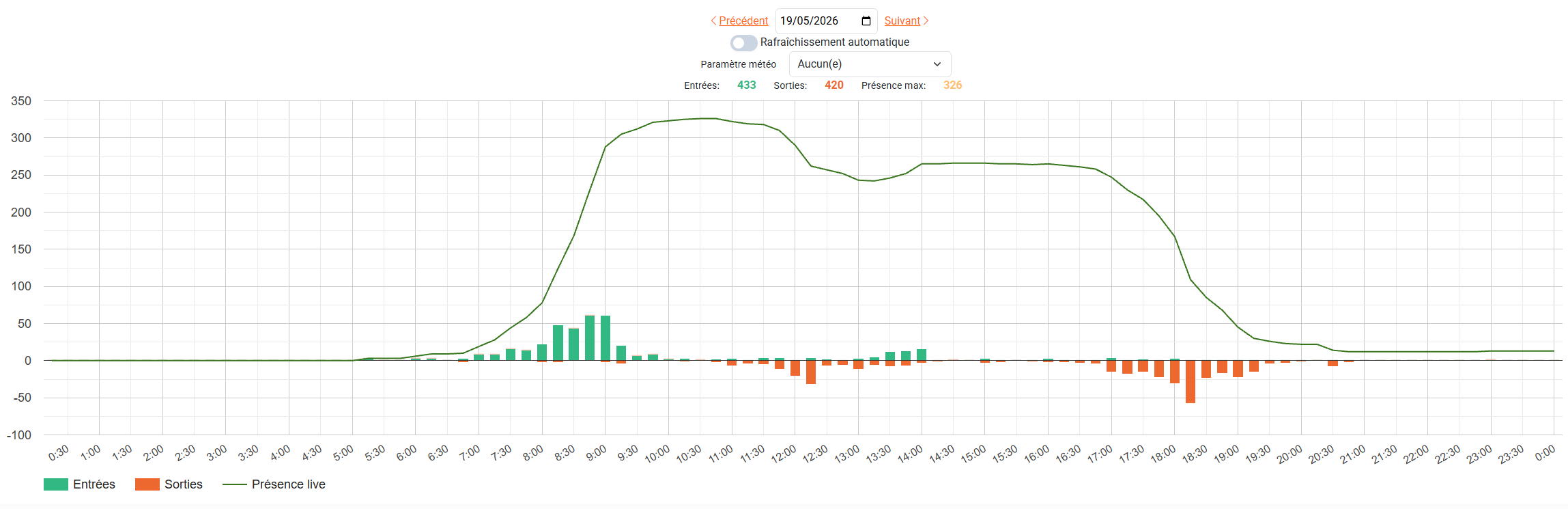

Identify peak traffic by time slot to allocate your resources

Day-by-day or week-by-week comparison to detect recurring patterns

Adjustable transmission frequency, up to a few minutes for your events

Access from any management station or web interface
Technologies
Designed for outdoor environments, no installation or wiring required.

Operates without external power (estimated battery life of over 2 ).

Set up in 2 minutes, no expertise required, delivered ready to use.

Designed for outdoor conditions, in natural or urban environments.

No images recorded, GDPR compliant.

Capable of separately identifying pedestrians, cyclists, and vehicles, depending on the selected counting type.

Online consultation or local data collection in isolated areas.
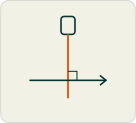
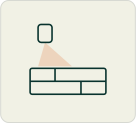
Thermal technology: the sensor reads the body heat of each user. The magnetometer detects the passage of metallic objects. No cameras, no images, no personal data.

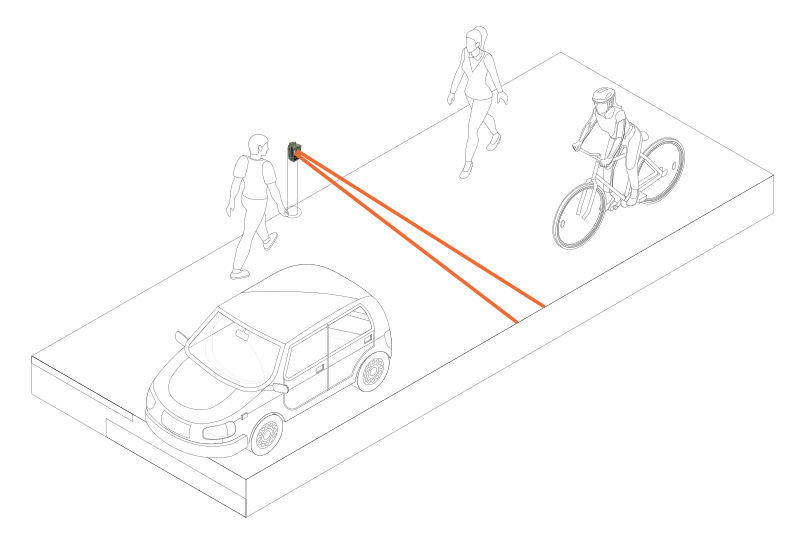
Each passage is timestamped and classified by mode and direction.
Data is aggregated into 15-minute intervals directly within the device.
Depending on the chosen frequency (from 5 minutes to 24 hours), the device sends its data via the available network.
If no network is available, local Wi-Fi retrieval remains possible.
The Kiomda Report platform displays hourly charts, daily totals, and seasonal comparisons from any browser.


The standard casing is weather-resistant and designed for outdoor use. Its sleek and discreet shape blends naturally into urban and natural environments.


A reinforced, vandal-proof casing, perfectly suited for areas with high public traffic. This model is designed to withstand all types of damage.

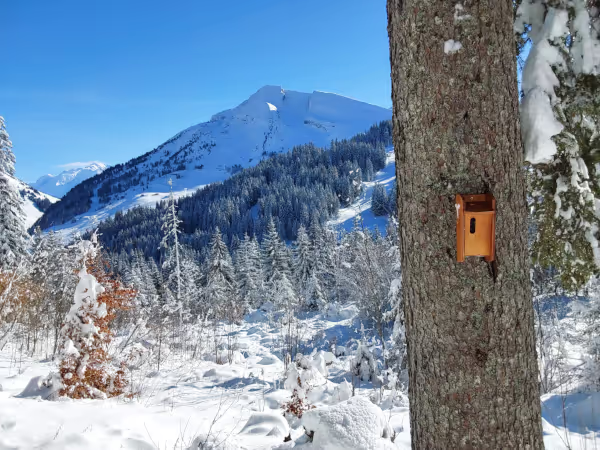
A birdhouse that blends into natural environments – ideal for nature reserves, parks, and protected areas.


A wooden post that completely conceals the sensor — ideal for greenways, rural paths, and heritage sites where visual impact must be minimal.

For structured layouts and high-traffic routes, Spirilo uses buried electromagnetic loop technology integrated directly into the road surface. Each passage creates a disturbance in the electromagnetic field, which the system analyzes to provide reliable counts, even in heavy traffic.
Unlike above-ground sensors, this approach allows for measurement without occlusion: users can follow each other closely without compromising data quality. The specific geometry of the loop also enables more detailed analysis of passages, with the ability to distinguish between user types—such as bicycles, scooters, or motor vehicles, depending on the configuration—based on their electromagnetic signature.

Electromagnetic detection provides stable measurements, independent of external conditions (light, weather, ambient temperature).
The loops are directly integrated into the road surface, with no visual impact or surface installation constraints.
No electrical connection required, runs on a long-life battery.

The system can be connected to existing loops, allowing for the modernization of a setup without extensive intervention.
The electromagnetic signature makes it possible to qualify flows and distinguish between different types of users.

Two consecutive loops determine the direction of travel. Suitable for local roads, access routes, or alternating one-way traffic.

A pair of loops counts passages and can distinguish between vehicle types based on their electromagnetic signature.

One loop per lane for independent counting in each direction. Suitable for zone entrances, roundabouts, or high-traffic transit routes.


Choose the solution that fits your needs
Whether you require continuous monitoring or a one-off analysis, our visitor counting solutions adapt to your projects with turnkey services.

A long-term investment to continuously equip your sites and own your attendance data.
For local authorities and site managers with ongoing monitoring needs.


A turnkey solution for testing, piloting, or measuring attendance during a one-time event, starting from €500.
Ideal for one-off events (festivals, trade shows, sports competitions), pre-purchase tests/pilots, and seasonal needs.
Case Studies
Each site is different — we help you choose the easiest and most reliable configuration.


Here we have put together the most frequently asked questions about our Verdilo counting solutions. If you can't find your answer, contact us directly
Yes, our sensors can distinguish between pedestrian and cyclist flows, even on shared lanes, in both directions.
Absolutely. Our data can help demonstrate a site’s usage and justify investments or upgrades in funding proposals to public authorities or partners.
Yes, we offer rental solutions starting from one day up to several months — perfectly suited for temporary events such as festivals, trade shows, performances, or one-off studies.
Not at all. Installation takes just two minutes — no power supply or civil works needed. The sensor can be mounted on a post, wall or integrated into a discreet housing (wooden post, street furniture, bird-box).
With default settings (data transmission every 12 hours), our counters are designed to operate for at least 2 years without external power. If you increase the transmission frequency, battery life will decrease due to higher energy consumption. This flexibility allows you to tailor the sensor’s operation to your needs while maintaining long-term performance.
By default, our sensors transmit data every 12 hours. This frequency can be adjusted on request. However, increasing the frequency reduces battery life. For locations without network access, we also offer a manual data collection solution — ensuring reliable tracking even in remote or offline areas.
Yes, our sensors are built to be robust, waterproof, and to operate in all weather conditions — rain, snow, or extreme temperatures.
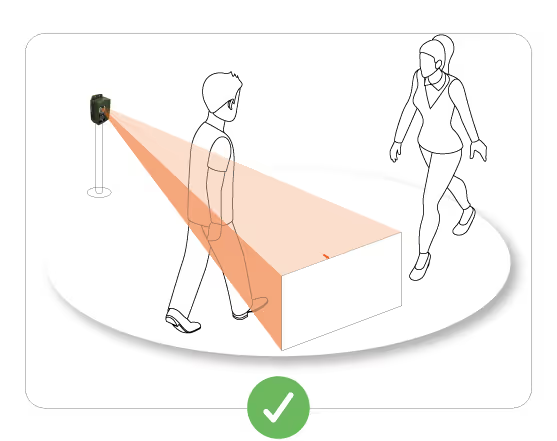
Yes, the Verdilo counter is designed to handle high traffic volumes and can accurately distinguish users even during crowded events. For optimal performance, we recommend placing the counter in a passage area where users are naturally filtered one by one (for example, near a barrier, gate, or controlled access point). Without such filtering, a group might be counted partially or as a single person. Proper positioning ensures accurate counting, even in busy conditions.
Yes, all data collected by our counters is 100% anonymized and compliant with data protection regulations, including the General Data Protection Regulation (GDPR). Verdilo uses thermal detection technology — not a camera. It does not capture images or collect personal data. The process is fully anonymous, with no way to identify individuals. Furthermore, no individual tracking is performed: only aggregated, quantitative data is transmitted.



.svg)
.avif)