English
Committed to an approach of revitalization of its city centers, the Communauté de communes Chinon Vienne et Loire wanted reliable data to better understand commercial dynamics at the intermunicipal level.
The objective was to go beyond qualitative perceptions in order to:
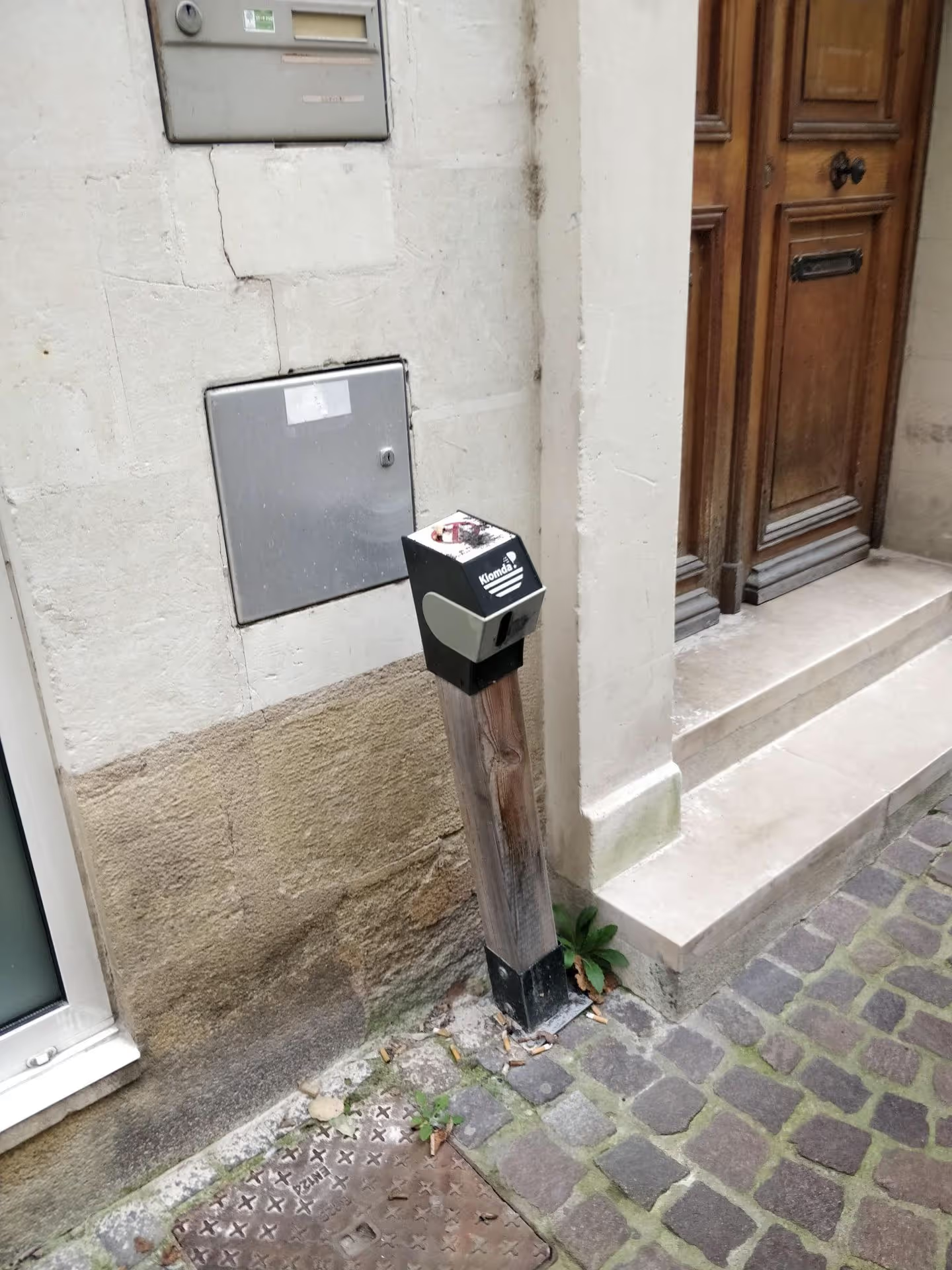
“The boxes allow us to define the most and the least commercial areas in the community of municipalities.”
Uses and dissemination of data
At this point, the data is mostly sent to elected officials of the community. They are exploited via reports produced by Kiomda, even if the community clearly expresses the desire to gain autonomy in the direct consultation of data, in accordance with the initial commitments of the project.
“For the moment, the data is presented to elected officials via requests for reports from Kiomda, but we want real autonomy in consulting the data.”
Attendance data is a structuring tool for local economic development. In particular, they allow:
“Retailers who are considering setting up have concrete data to help them choose their area of establishment more finely.”
The community thus plays an active role in facilitator, by providing neutral and factual indicators.

Understand the technical challenges and optimization levers for your own flows