

English


Measuring site attendance has become a central issue for many public and private actors. Whether it is a city center, a natural area, a bike path or a site welcoming the public, having reliable data on flows makes it possible to better understand uses, to anticipate changes and to base decisions on facts rather than on impressions. This is precisely the role of the passage counter. Behind this relatively simple term lies a key tool for the observation of territories, which is still sometimes misunderstood or reduced to a simple counter. In reality, its usefulness goes far beyond that.
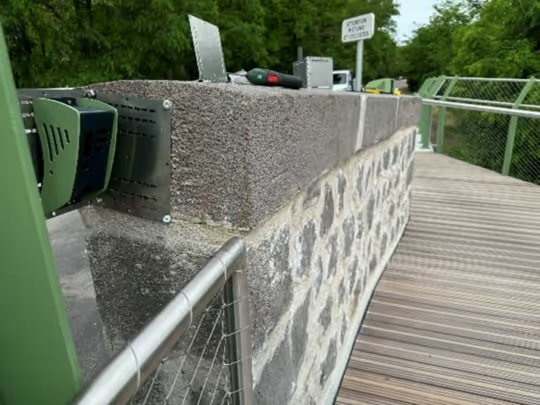
A passage counter is a device designed to Automatically Count the Passages at a Given Point. It Can Measure the Passage of Pedestrians, of Cyclists, of Vehicles Or of Mixed Flows, according to its technology and its configuration.
Unlike other observation tools, it does not seek to identify people or to analyze their individual behavior. It only focuses on one thing: Quantifying Flows, over time, continuously and objectively.
Installed on a path, an entrance, a path or a constrained passage, the counter becomes a reference point. From there, it is possible to observe the evolution of attendance hour by hour, day after day, season after season.
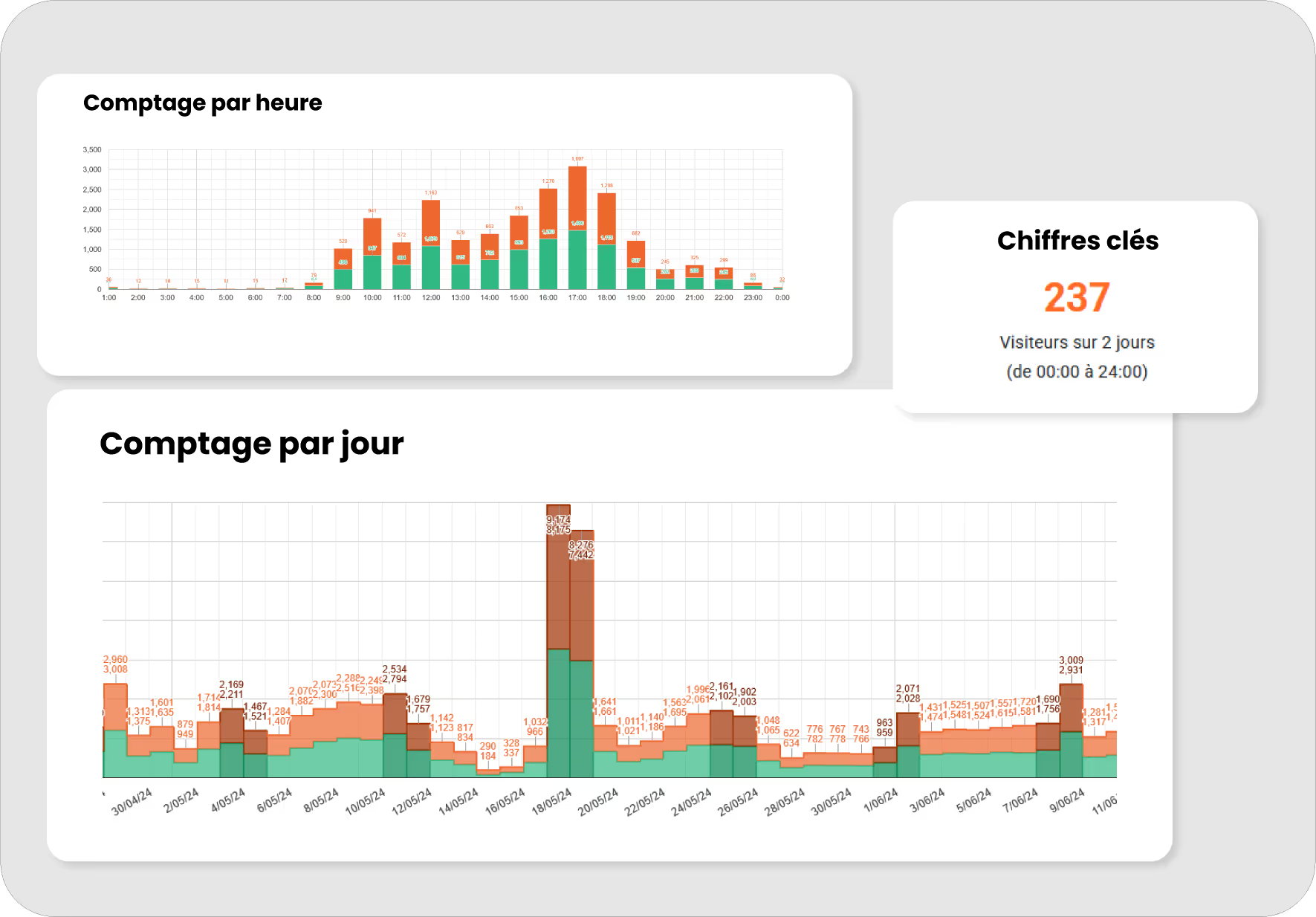
The first advantage of a passage counter is obviously to Measure Actual Attendance Of a site. How many crossings take place each day? At what times? With what variations according to the periods or the external conditions? These data make it possible to come up with approximate estimates and to objectify uses.
But the interest does not end there. When Installed Over Time, the Counter Also Allows Understand rhythms and dynamics. It highlights peak hours, off-peak periods, and the impact of an event, layout or organizational change. It then becomes a tool for analysis, and no longer just for counting.
For local authorities, site managers or mobility operators, this information is valuable. They are used to adjust maintenance, to size equipment, to prioritize investments or to assess the effect of a public policy. The Passage Counter is thus part of a logic of Decision support.
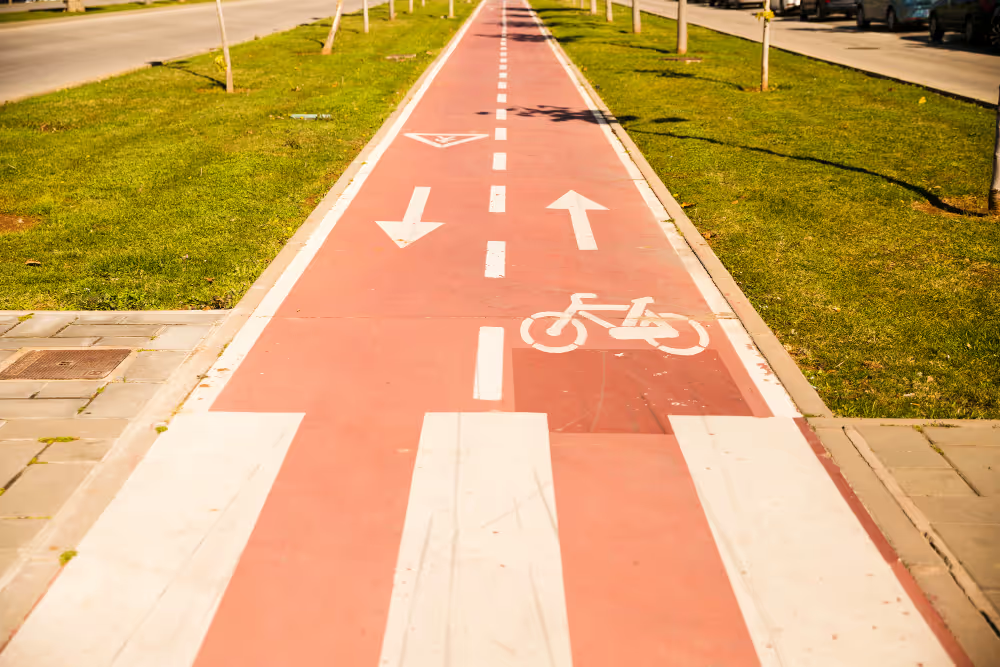
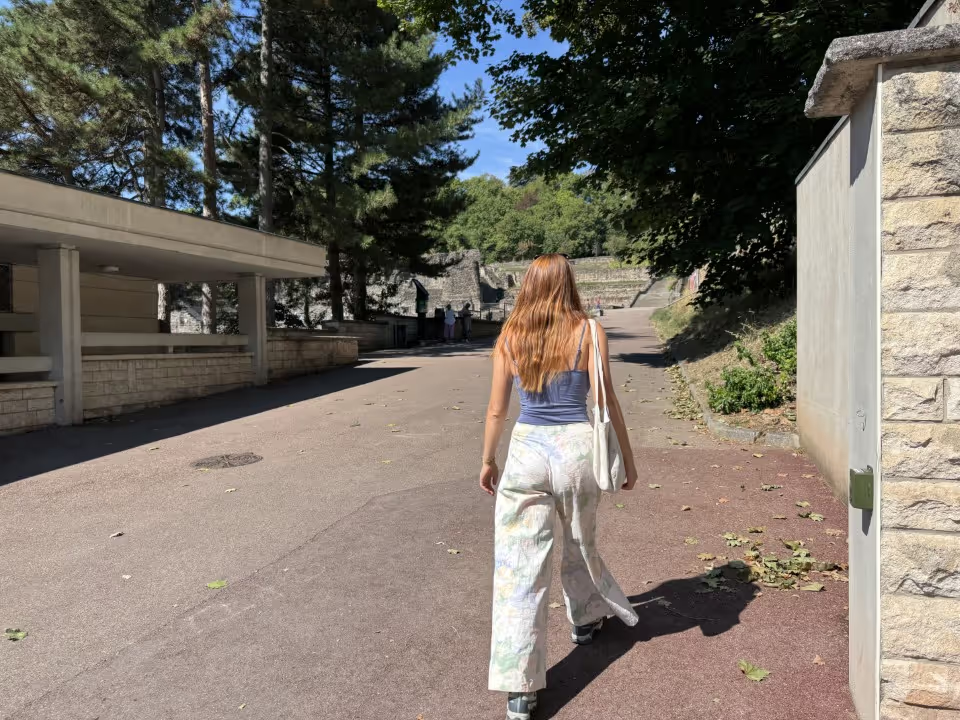
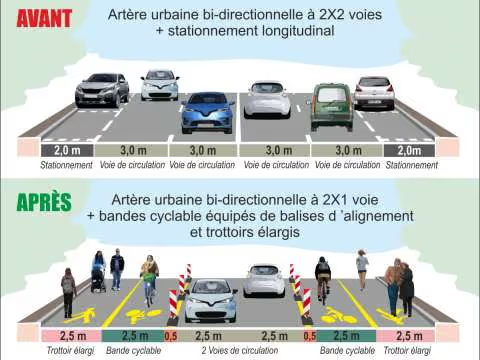
Depending on the context, a flow meter can be used to measure different types of flows. They can be exclusively pedestrians, for example on an urban path or a natural path. It can also be dedicated to cyclists, on a track or a greenway. In other cases, it makes it possible to measure motorized vehicles, or even mixed flows, when several types of users share the same space.
The direction of traffic is also an important factor. Some sites require bi-directional measurement, others require one-way counting. These choices have a direct impact on the type of meter to be installed and on the quality of the data produced.

There are several pass-through counter technologies, each based on a different detection principle. Some use infrared beams, others use radars, ground counters or even systems based on image analysis. In some cases, several technologies are combined in order to improve the reliability of counting.
The Key Point to Remember Is That Technology is never an end in itself. An efficient meter is above all a meter adapted to its environment and to the expected use. A very specific device in a given context may prove to be unsuitable elsewhere.
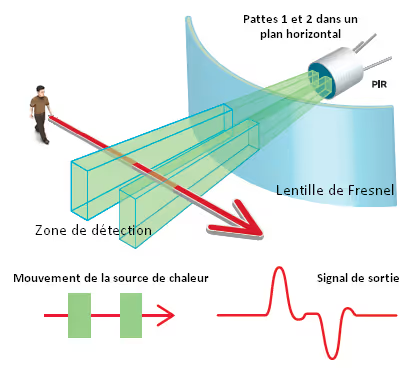
Find our comparison of counting technologies here.
The passage counter is not intended to replace all other observation tools. However, it is distinguished by several strong characteristics. It Works in a Way Automatic, without permanent human mobilization. It allows a measurement Continuing, over long periods of time. And above all, it produces data Homogeneous Over time, which is essential for analysing developments.
Field surveys provide an essential, but timely, qualitative reading. Cameras can provide detailed information, but often raise regulatory, acceptability, and maintenance issues. The Passage Counter Finds Its Place In This Set As A simple, sturdy and durable tool, particularly suited to the creation of attendance observatories.
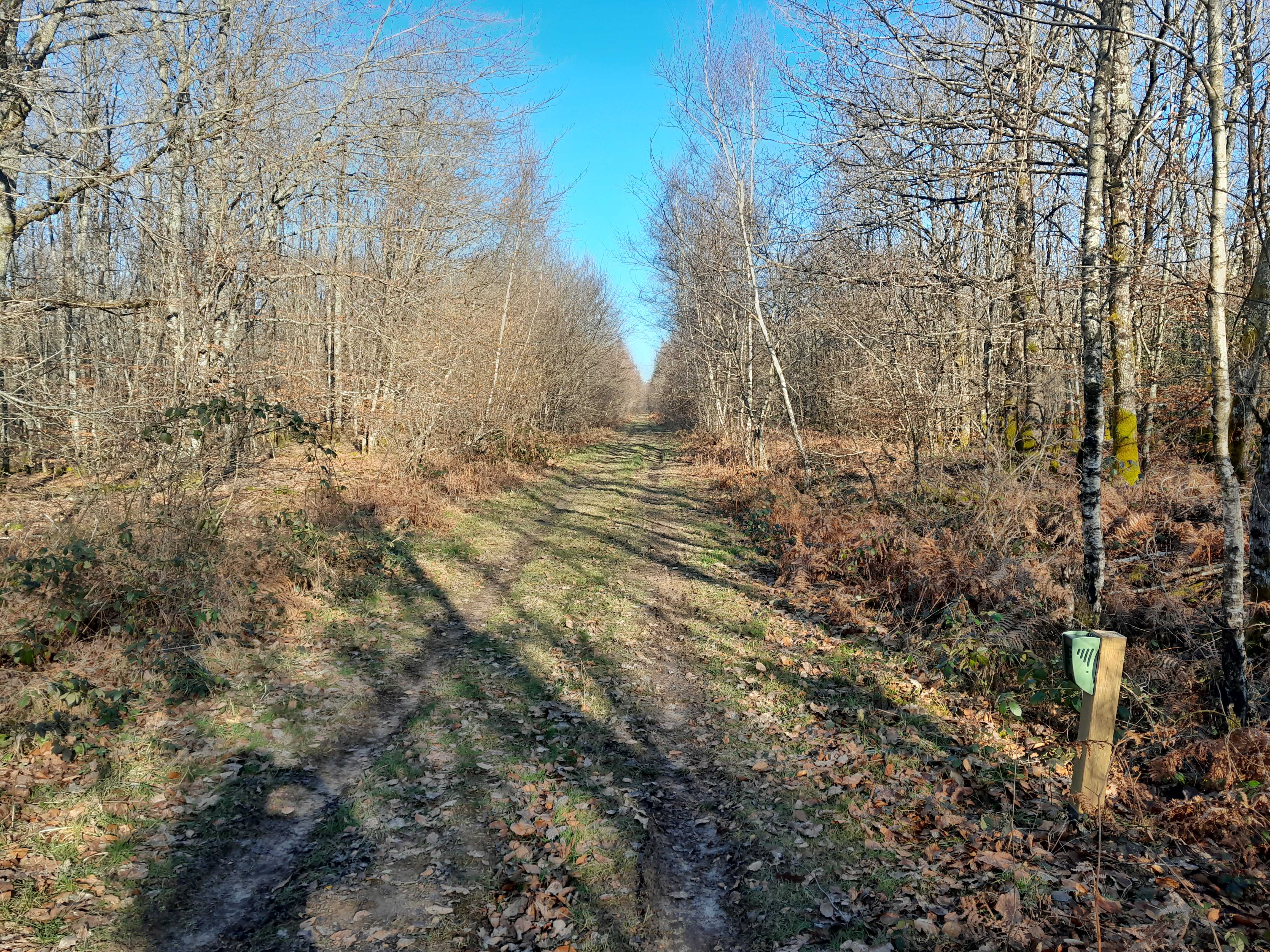
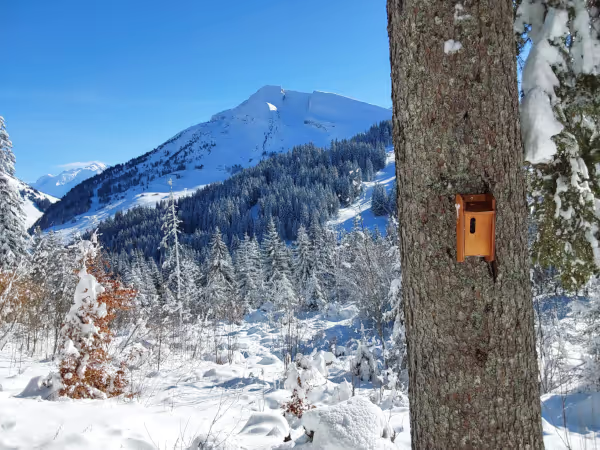
A pass-through meter installed outside must deal with:
Robustness and autonomy are then decisive.
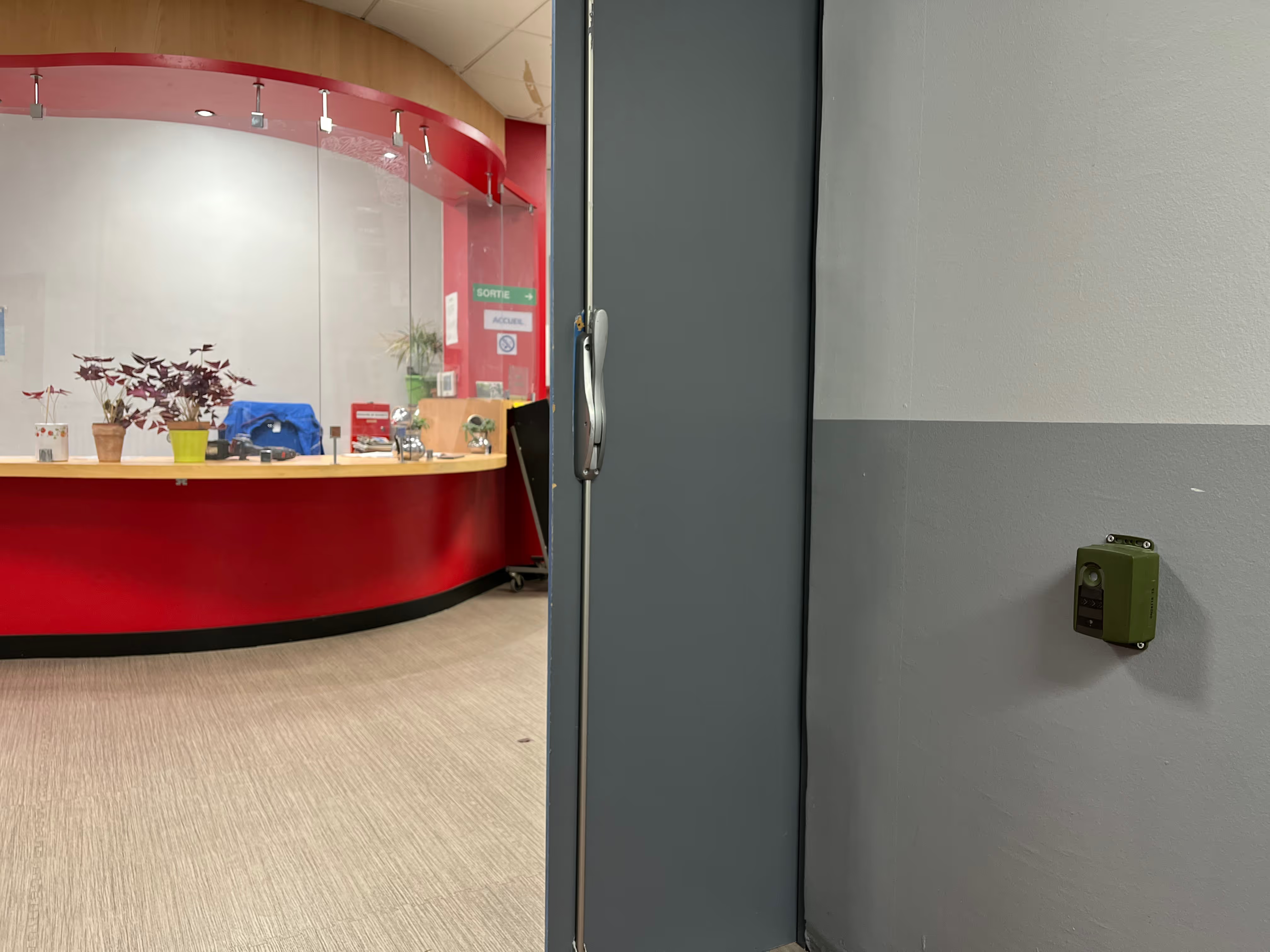
The constraints are different:
The context of use must always take precedence in the choice of the device.
Choosing a pass counter does not consist in selecting a model from the catalog. It is above all a Qualification process. The type of flow to be measured, the direction of traffic, the duration of the need — temporary or permanent — as well as the constraints of the site must be analyzed continuously.
It is also important to think about how the data will be used. Is an hourly count enough? Is it necessary to be able to compare the years with each other? Does data need to be exported to feed reports or analysis tools? These questions directly determine the relevance of the chosen system.
In the public space, the question of data protection is unavoidable. A well-designed pass meter does not collect No Personal Data. It does not recognize faces, individuals, or individual trajectories. It is limited to counting passages.
This approach ensures:
This is a central issue for communities and managers of sites open to the public.
The passage counter may seem simple in principle. However, when properly selected, properly installed and used over time, it becomes a Strategic tool. It sheds light on real uses, reveals trends invisible to the naked eye and provides an objective basis for decisions.
In a context where territories must reconcile attractiveness, sobriety and quality of use, having reliable data on flows is no longer a luxury. It is an essential condition for acting in an informed manner.
Each context is specific. The choice of a meter, its location and its configuration directly conditions the reliability of the data produced. Prior consideration makes it possible to avoid errors and to ensure the continuity of observations over time.



.jpg)


.svg)