English



The Jardin des Plantes de Montpellier, created in 1593 at the request of Henri IV, is the first botanical garden in France. Located in the heart of the University of Montpellier and attached to the Faculty of Medicine, it welcomes nearly 500,000 visitors every year, divided between individual audiences, cultural and scientific events, and university activities. With such a diversity of visits and challenges that are both educational, scientific and environmental, it was essential for the garden management to have accurate figures in order to: monitor and understand the overall attendance of the site and its seasonal evolution, analyze the impact of events on visitor attendance and experience, analyze the impact of events on visitor attendance and the experience of visitors, strengthen security management and the preservation of biodiversity, by identifying the most stressed areas and adapting measures to protect fragile plants, promote the site to institutions and partners by putting forward concrete figures on its attractiveness.
Created in 1593 at the request of Henri IV, the Jardin des Plantes de Montpellier is the First botanical garden in France. Today attached toUniversity of Montpellier And at the Faculty of Medicine, it plays an essential role both for biodiversity conservation, thewelcoming the public, and theorganization of cultural and scientific events.
With a annual attendance of 500,000 visitors, it was essential to have a accurate flow monitoring to better understand the uses of the site and adapt management strategies.
“Even for us, in our backyard, we don't always realize the extent of attendance.”
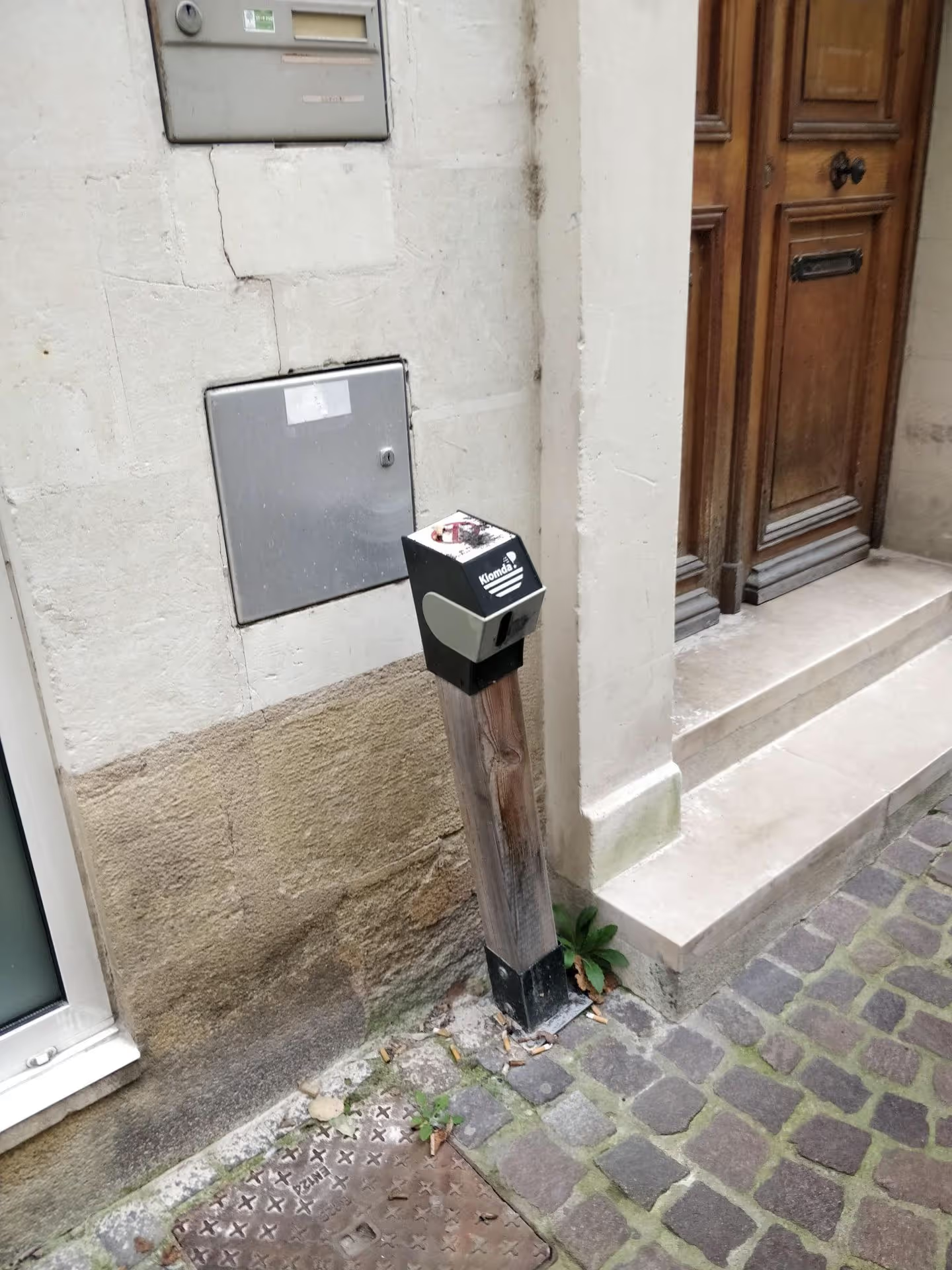
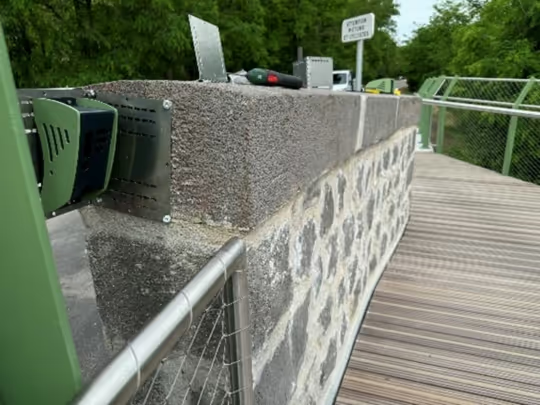
The installation of a Kiomda counting box Has allowedobtain reliable and continuous data, offering a detailed view of attendance and the impact of events organized on site.
The Jardin des Plantes welcomes every year numerous events, which generate peaks in attendance:
“The scope of use is excessively broad. We are a botanical garden with a university status, but also a setting that welcomes a diversity of audiences and events.”
The Kiomda counting box Allows you to precisely quantify these flows, to analyze its evolution and to measuring the impact of events on the overall attendance of the site.
Flow monitoring is not limited to event analysis: it also plays a role crucial in the management of safety and the preservation of biodiversity.
“We are still lucky to have an agent on site who screens at the entrance, but we also need to protect some fragile plants by moving them to more preserved areas.”
During an event last October, organized as part of theAction Cœur de Ville, the Jardin des Plantes team decided not to allow the public to move freely in certain areas in order to preserve the fragile environment. These decisions are based in part on counting data, which make it possible to assess the impact of a large influx of visitors.
Counting also makes it possible to better value the site, by highlighting some unexpected phenomena, such as a significant attendance in the middle of winter. This data is valuable to guide future communication and public reception strategies.
“What we need now is a public inquiry to find out who our audience is. Now that we have the attendance figures, it would be appropriate to better understand the profiles of visitors.”
The data collected thanks to Kiomda box are sent to several key stakeholders:
Thanks to detailed attendance reports, these various actors have tangible figures to adjust their decisions and value the impact of the garden on the territory.
Overall satisfaction with the solution Kiomda is excellent, with a note of 9/10. The customer service and support were particularly appreciated.
“We are very happy with this solution. It is a French company, with great attention and a quality customer relationship, which is becoming rare today.”
However, a point of improvement has been identified concerning the data consultation interface. Data export, currently detailed in increments of 15 minutes, would benefit from being optimized to facilitate the formatting of analyses.
“The interface is good, but smoother data formatting and more intuitive sorting tools would be a real plus.”
The logistical experience for sending the box for maintenance could also be improved, by better specifying the delivery address to avoid unnecessary back and forth between internal departments.
The Jardin des Plantes de Montpellier was able, thanks to Kiomda counters, better understand Its annual attendance, refine event management and strengthen its actions in favor of protection of the site and biodiversity.
?




.jpg)


.svg)