

English



Between November 2025 and February 2026, Kiomda conducted an experiment in Paris aimed at objectifying the attendance of its sports facilities. Ten municipal gymnasiums have been equipped with automatic counting sensors developed by Kiomda. More than 200,000 crossings have been recorded, i.e. nearly 500 daily crossings per site. This experiment, conducted as part of the Paris Challenges carried out by Paris&Co with the support of the City of Paris, aimed to compare real attendance data with traditional declarative data and to reveal uses that were hitherto invisible in traditional monitoring systems.

In most communities, knowledge of gymnasium attendance is based on declarative data: attendance sheets, feedback from agents, information provided by sports associations. This data makes it possible to structure the offer and to allocate slots, but by nature they remain partial.
These declarative systems effectively capture planned reservations, attendance declared by associations or reception agents, and theoretically occupied slots. On the other hand, they do not document differences between reservation and actual presence, uses with free or unsupervised access, periods of real underuse despite a reservation, or flows outside of official opening hours.
This gap between planning and real use limits the ability to finely control equipment. It is becoming difficult to know if the slots are actually occupied, to identify periods of underuse, or to detect unsupervised uses. Some of the attendance, especially with free access or in the absence of an agent, thus escapes traditional monitoring systems. Managers find themselves managing expensive equipment with partial visibility on their real occupancy.
It is in this context that Paris&Co, with the support of the City of Paris as part of the Paris Challenges program, conducted an experiment aimed at objectifying the attendance of its sports facilities.
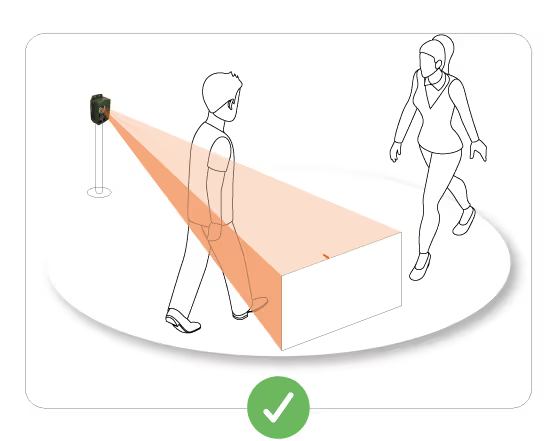
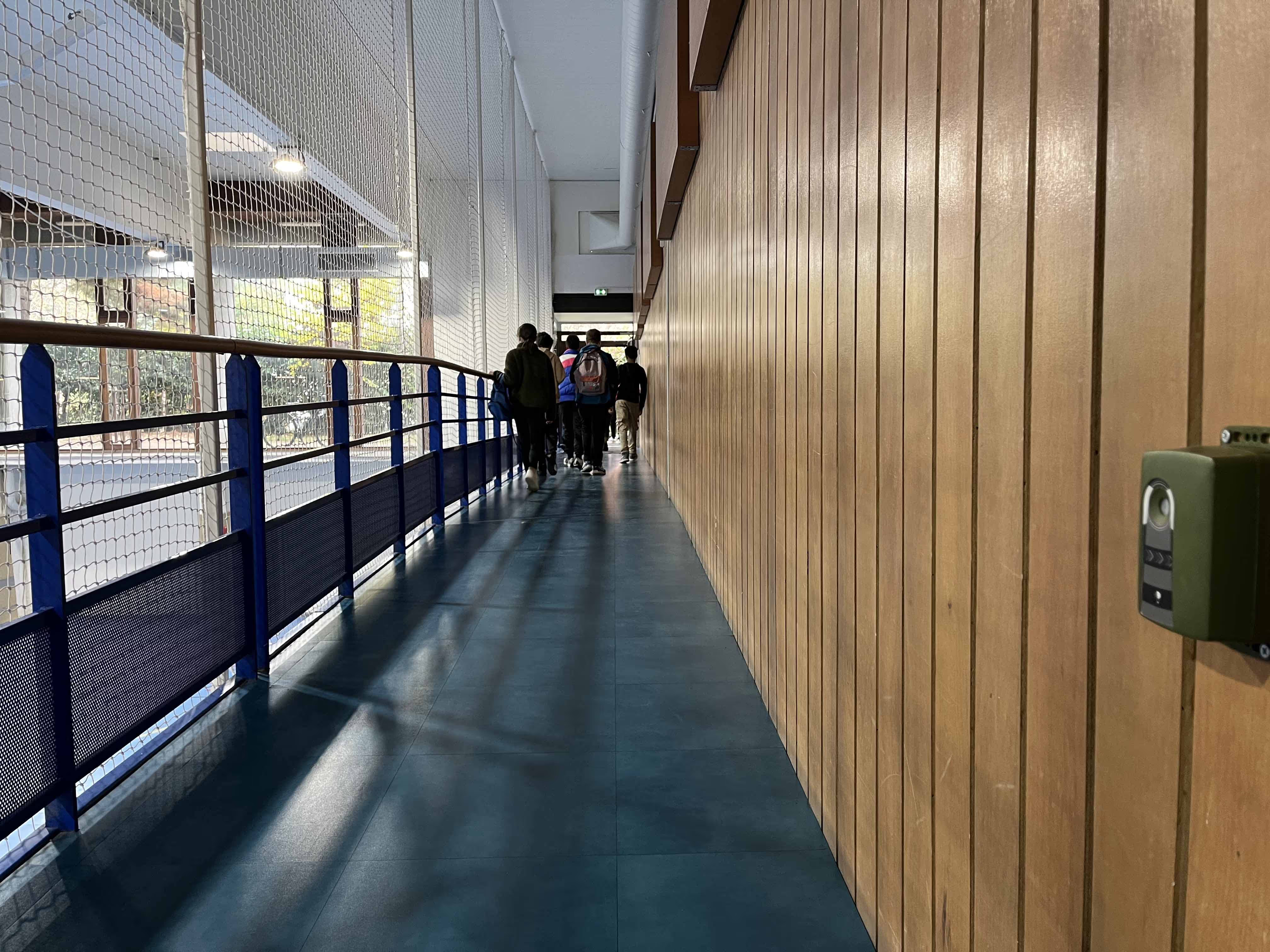
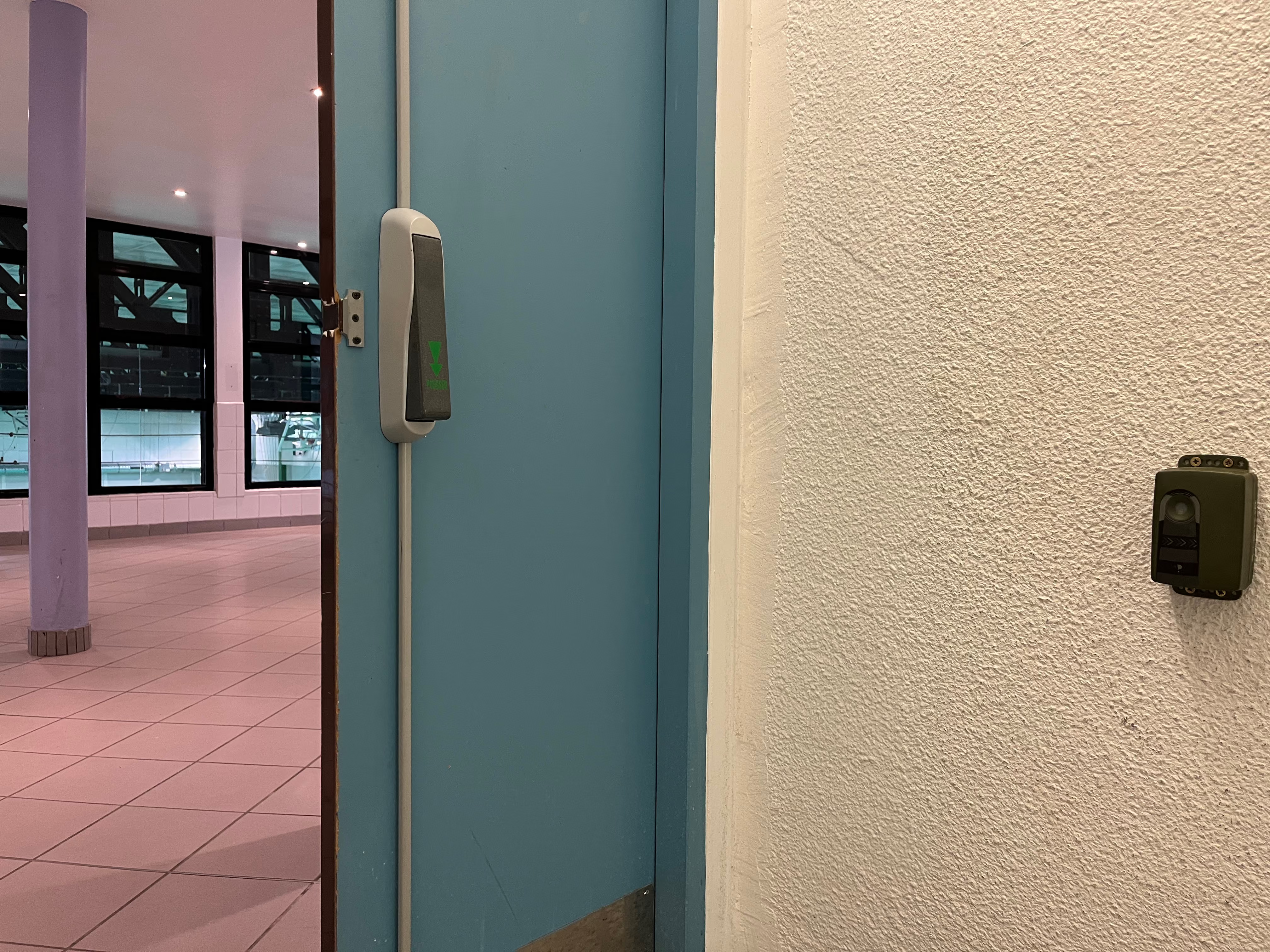
The experiment took place from November 14, 2025 to February 28, 2026 in ten municipal gymnasiums in Paris. Kiomda stereoscopic thermal sensors were installed at the entrances to each site, making it possible to collect more than 200,000 passages in total, i.e. an average attendance of around 500 passages per day and per site. The data, anonymized and consolidated in 15-minute increments, offers a detailed reading of attendance dynamics: hourly distribution, peak attendance, real occupancy rate of slots, differences between weekdays and weekends.

Beyond the volume of data collected, the experiment aimed to confront two sources of information: on the one hand, data from continuous automatic counting; on the other hand, existing internal data, built on the basis of agent declarations and reservation schedules.
This comparison made it possible to shed new light on the real uses of the equipment:
Unfrequented reserved slots. In practice, some slots theoretically reserved by associations or groups appear to be infrequent or even empty.
Significant open access uses. Other niches, in free access or outside the supervised beaches, reveal significant activity that was not documented in conventional monitoring systems. These uses, although empirically known by the agents, were not systematically measured.
Unanticipated peak attendance. Flow analysis makes it possible to identify periods of high traffic outside of the hours traditionally considered to be busy — especially at the end of the day or at the weekend on certain sites.
These differences raise concrete operational questions:
Objective data thus becomes a decision-making tool to adjust the offer as close as possible to real practices.
One of the major contributions of experimentation lies in the ability to observe situations that were previously difficult to objectify. Unframed slots, in particular, constitute a blind spot for traditional monitoring devices.
On several sites, the sensors revealed significant attendance outside of reserved slots or during free hours. These uses, often tolerated or encouraged in a logic of opening up equipment, were not quantified in a systematic way.
Concrete example: A gymnasium records an attendance of 80 to 100 times per day with free access on weekends, while the declarative data only captured reserved slots. This information makes it possible to better understand the real use of the equipment and to adapt the services accordingly (security, maintenance, opening hours).
In one particular case, the detection of nocturnal passages raised questions. After analysis, it was either a real use that was not documented (maintenance intervention, security guard), or a specific case requiring a field check.
This ability to reveal unexpected situations illustrates the value of continuous and objective measurement: it allows you to ask questions that declarative systems do not allow you to formulate.
The exploitation of data has also highlighted the difficulty of consolidating heterogeneous sources. The intersection between sensor data and declarative data requires alignment and interpretation work.
Different data formats. Booking schedules, agent feedback and sensor flows do not use the same units of measurement or the same temporal granularities. Harmonizing these sources requires a structuring effort.
Contextual interpretation required. A discrepancy between declarative data and real data does not automatically mean a malfunction. It can reflect legitimate practices (delayed arrival of a group, early departure, shared use of a niche). The analysis must integrate the field context.
Analytical skills to be developed. The production of reliable data is not enough in itself; it must be accompanied by appropriate analysis capabilities in order to be fully exploited. Communities need visualization tools and dashboards that automatically cross-reference sources and highlight significant differences.
This point is an important lesson from experimentation. Measuring attendance is a prerequisite, but the central challenge is to transform this data into operational management levers.
On a technical level, the results obtained appeared solid, with a reliability rate greater than 95% on the majority of sites.
The ten gymnasiums represented varied configurations: single or multiple entrances, canalized or free flows, high-capacity equipment or small specialized rooms, presence of agents or automated free access. The most complex configurations, especially those involving multiple entrances or poorly channelled flows, made it possible to identify operational limits and refine deployment conditions.
The indoor environment poses specific challenges compared to outdoor installations: lower temperature variations (less thermal contrast), artificial lighting, reflective surfaces (mirrors, windows), proximity to walls.
Kiomda stereoscopic thermal sensors have demonstrated their ability to operate reliably under these conditions, with an accuracy comparable to that observed on outdoor installations (greenways, natural areas).
?
The experiment confirmed the ease of implementation of the device.
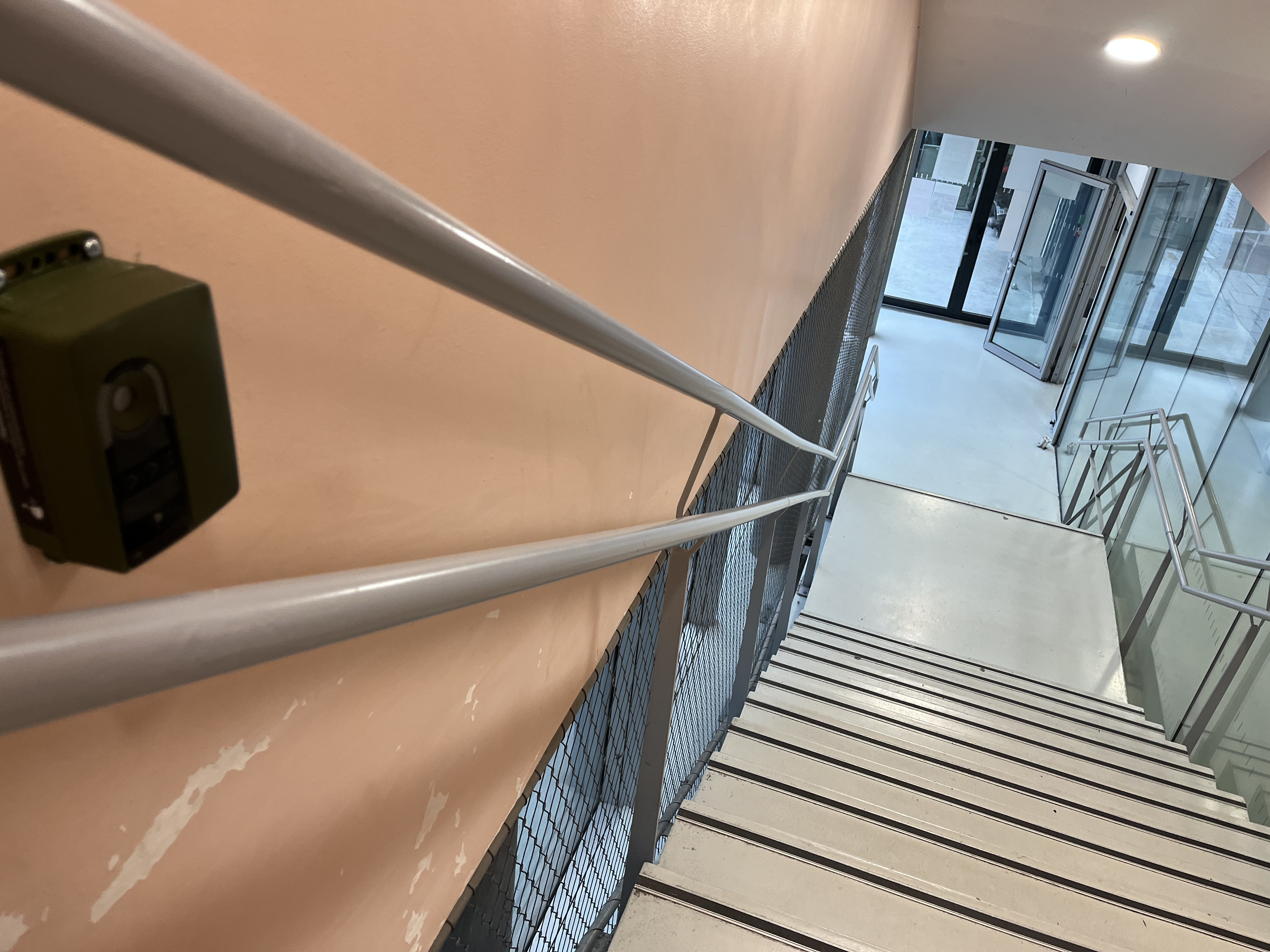
The sensors were fixed to existing masts, walls or supports, without requiring an electrical connection thanks to their battery operation. The installation was carried out in 30 minutes per site, and some agents were able to intervene directly on the installation of the sensors after initial support.
Acceptability on the ground proved to be generally good. The teams quickly perceived the advantages of the system, in particular in view of:
For the City of Paris, this approach paves the way for a better understanding of the real uses of sports equipment, in addition to existing tools. It highlights the value of an approach based on measurement, in particular to analyze poorly supervised niches and adjust the offer as closely as possible to practices, as well as to identify underused or saturated equipment.
For Kiomda, this experiment is an important validation of the technology's ability to function in indoor environments, characterized by irregular flows and varied configurations.
Beyond the sports field, this experiment opens up perspectives of application in other public facilities open to the public:
In all these cases, the ability to measure continuously, anonymously and reliably constitutes a strategic management lever.
More generally, this feedback highlights an evolution in public facilities management practices. The question is no longer just to plan uses, but to observe and understand them based on objective data.
In a context of increased budgetary constraints, strong citizen expectations about the accessibility of public services and the need to optimize the allocation of resources, the ability to measure flows reliably and continuously becomes a structuring lever.
Public facilities are no longer just planned infrastructures: they are becoming spaces driven by data, where each adjustment decision can be based on a factual observation of real uses.






.jpg)


.svg)





.avif)