

English



Since September 2024, the Côtes d'Armor Department has been monitoring visitor numbers in its sensitive natural areas with 14 Kiomda counters, both mobile and fixed. The objective: to plan each site — parking, signage, and visitor reception — based on real figures rather than estimates, and to monitor changes over time.

A sensitive natural area cannot be planned arbitrarily. Too many parking spaces, and the very site you aimed to preserve becomes artificialized; too few, and it overflows on busy days. Between these two extremes, the one thing that often provides clarity is missing: a number. Without a counter, all that remains is an estimate — serious, diligent, but still just an estimate.
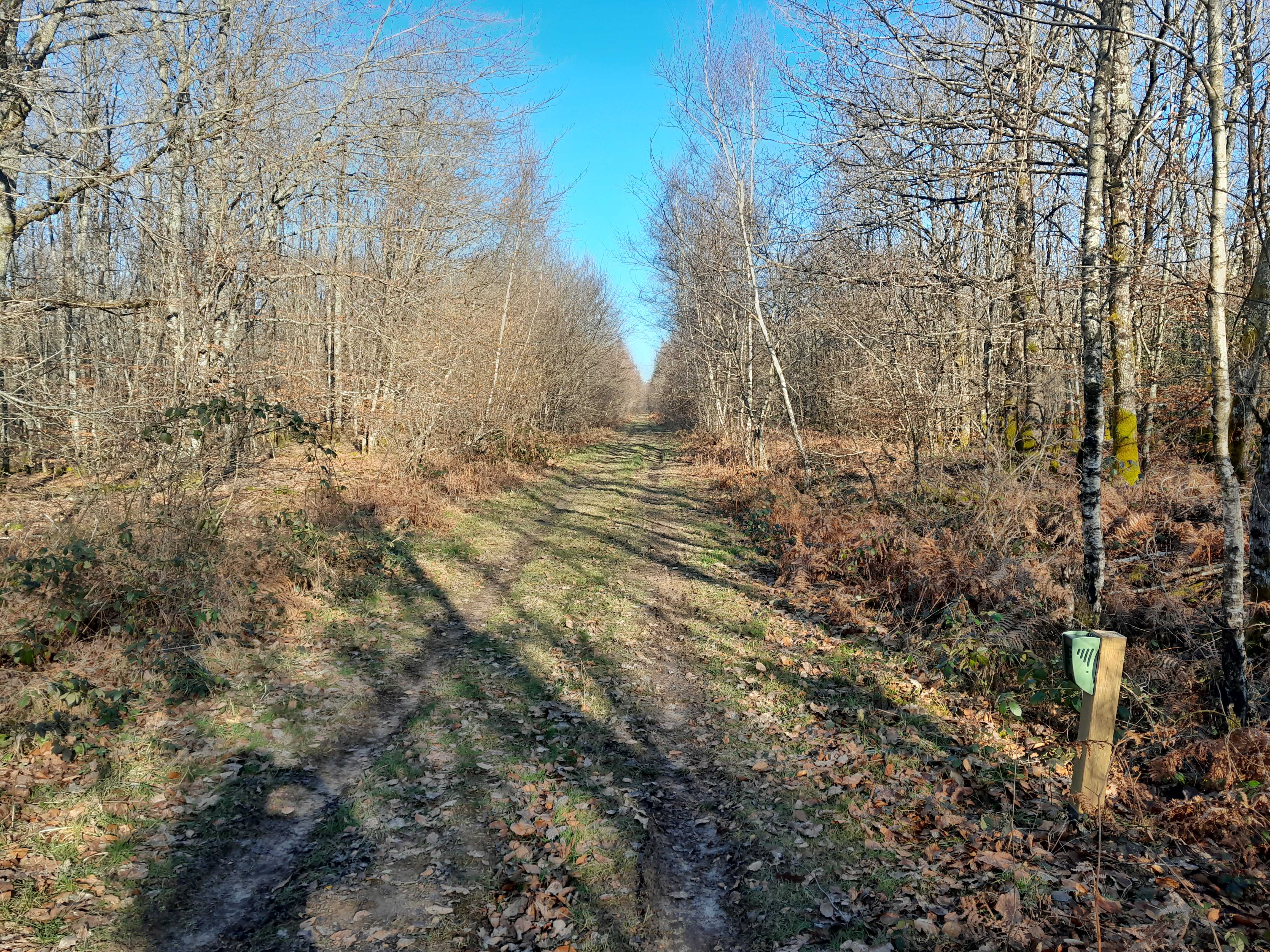
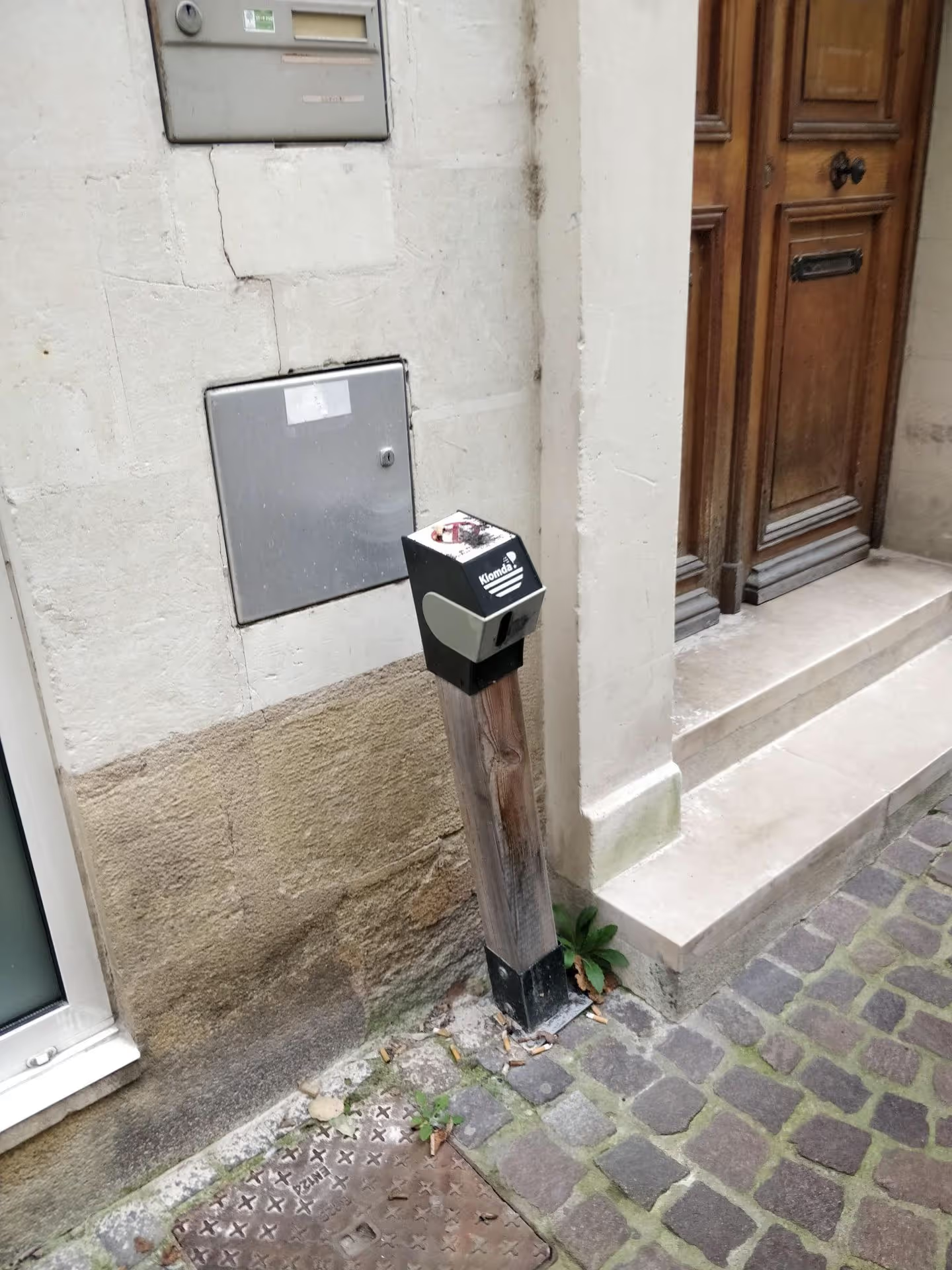
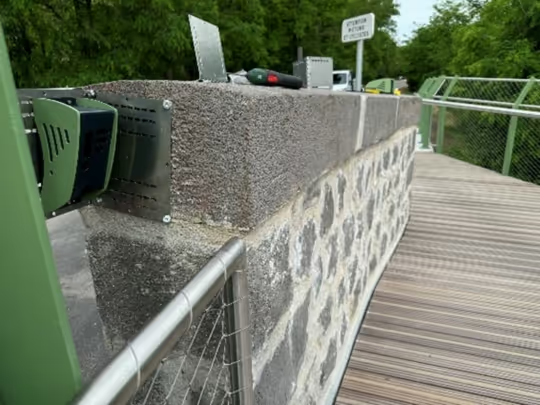
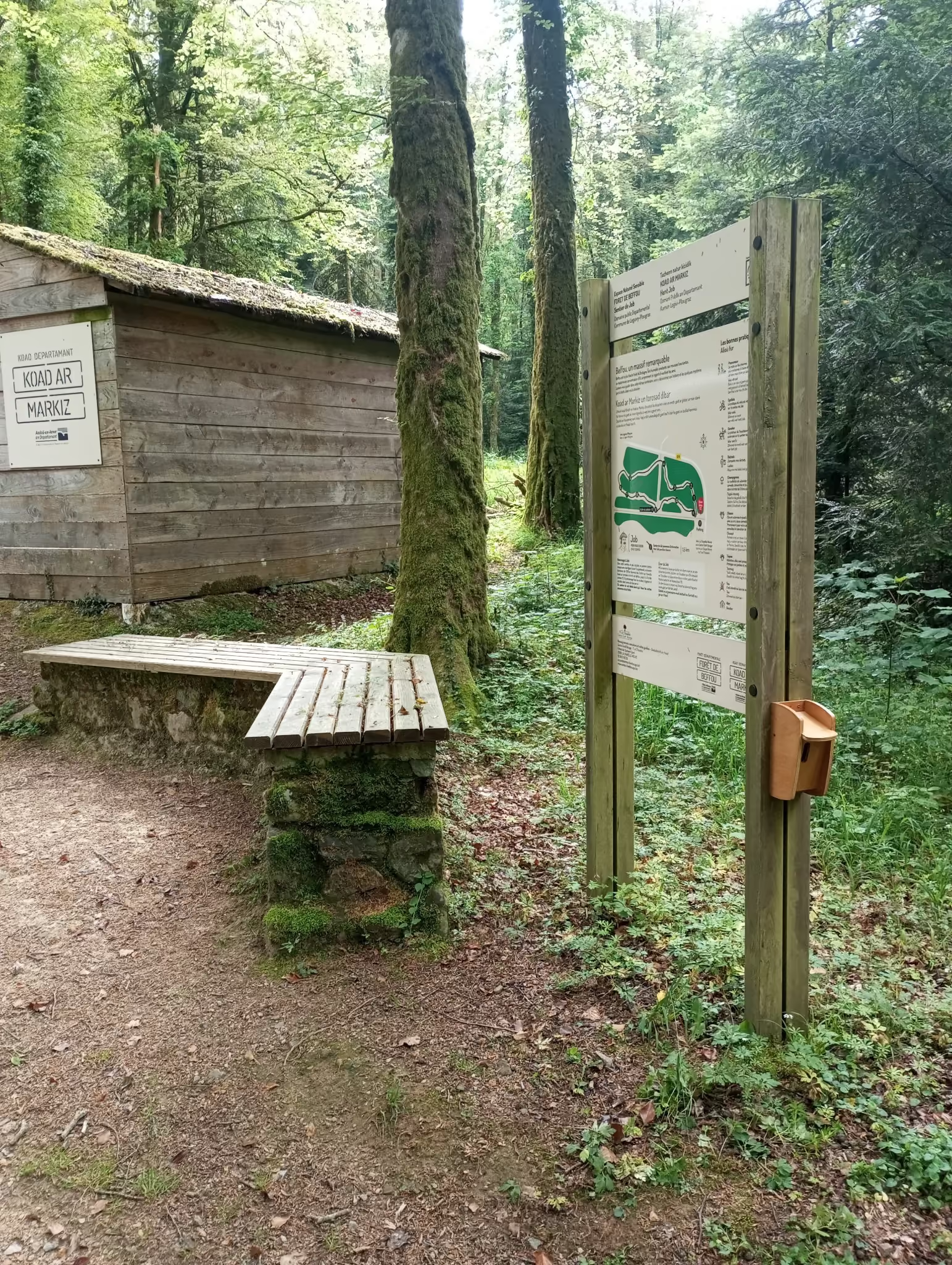
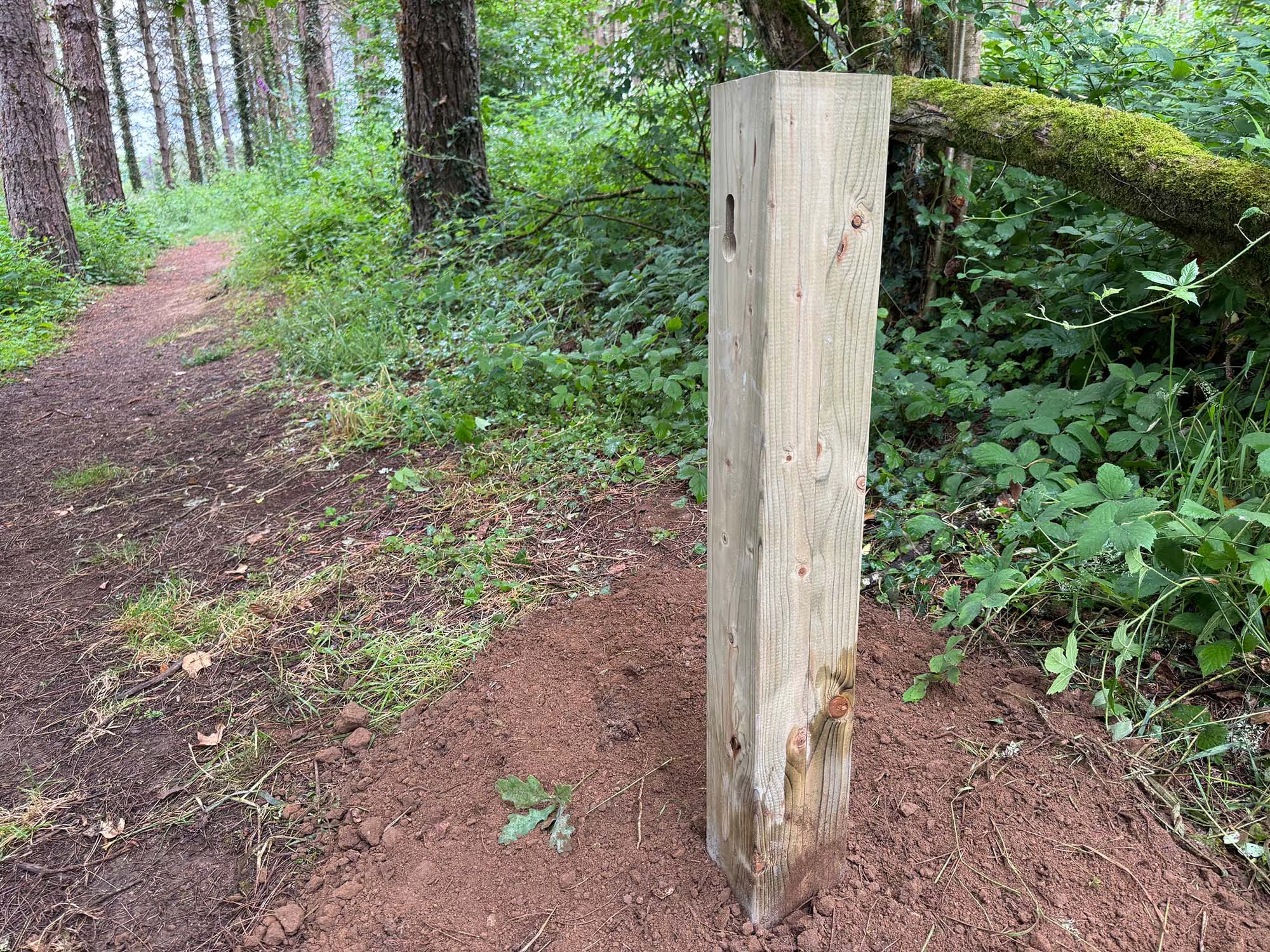
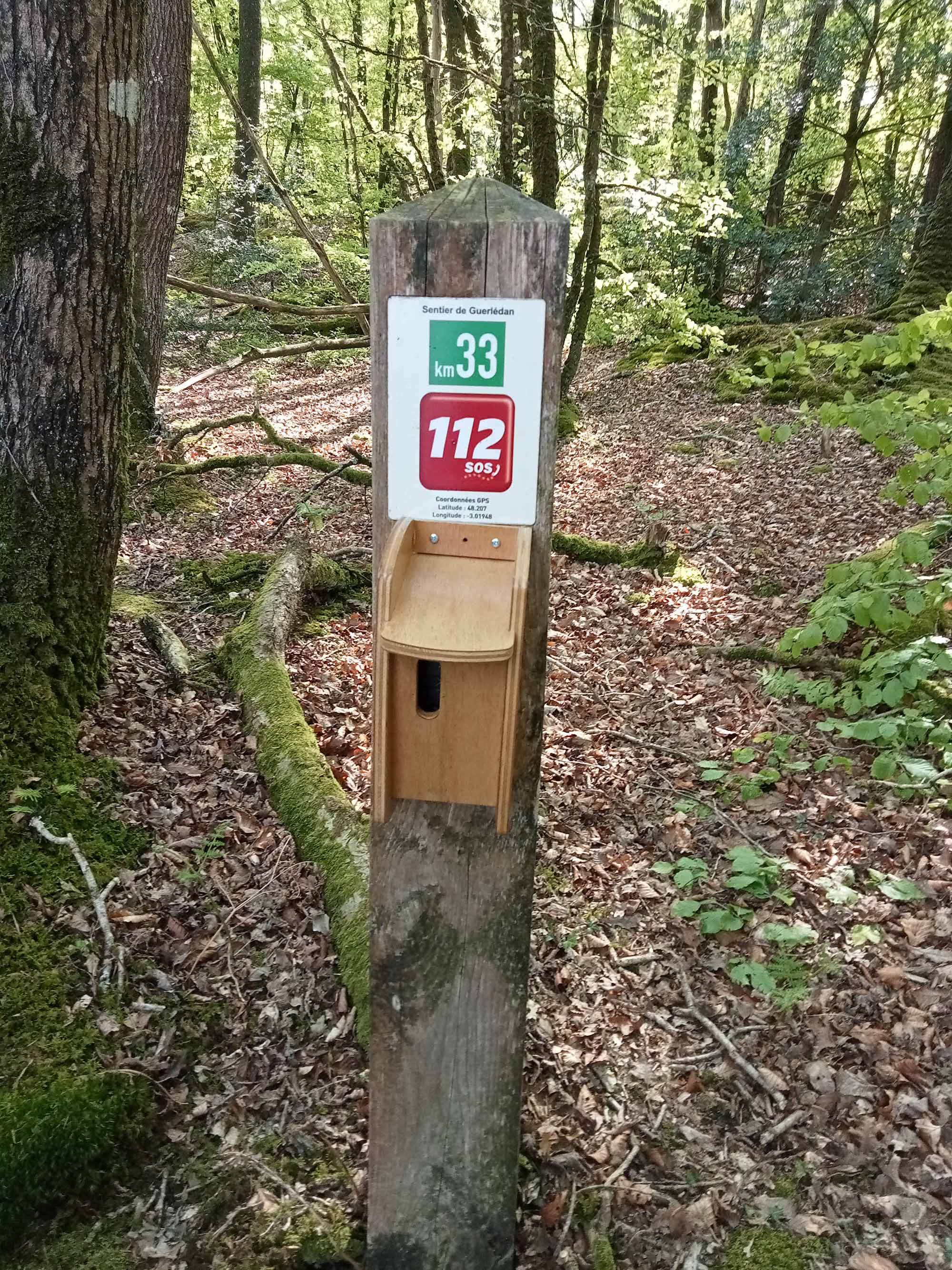
Since September 2024, the Côtes d'Armor Department has turned this figure into a working tool. Fourteen Kiomda counters are installed in its sensitive natural areas, from Lake Guerlédan to the Beffou arboretum, from Erquy to La Roche-Jagu. Some are hidden in hollowed-out wooden posts or behind a birdhouse-shaped cover: in these landscapes, a noticeable counter is already one too many.
« We purchased the units to count visitors in sensitive natural areas, so we can properly manage them based on their visitor numbers: site development, visitor reception, parking, and signage. It's clearly a decision-making tool. »
— Florence Parent, Côtes d'Armor Department
Not all sites, however, present the same issue. Some are highly frequented or require year-after-year monitoring; others are more discreet, less pressured. Each requires a different response — and the system adapts accordingly.
« For highly frequented sites, we install fixed counters; for smaller ones, mobile counters. We leave them for a maximum of three years, then move them to other sites to get an idea of their visitor numbers. »
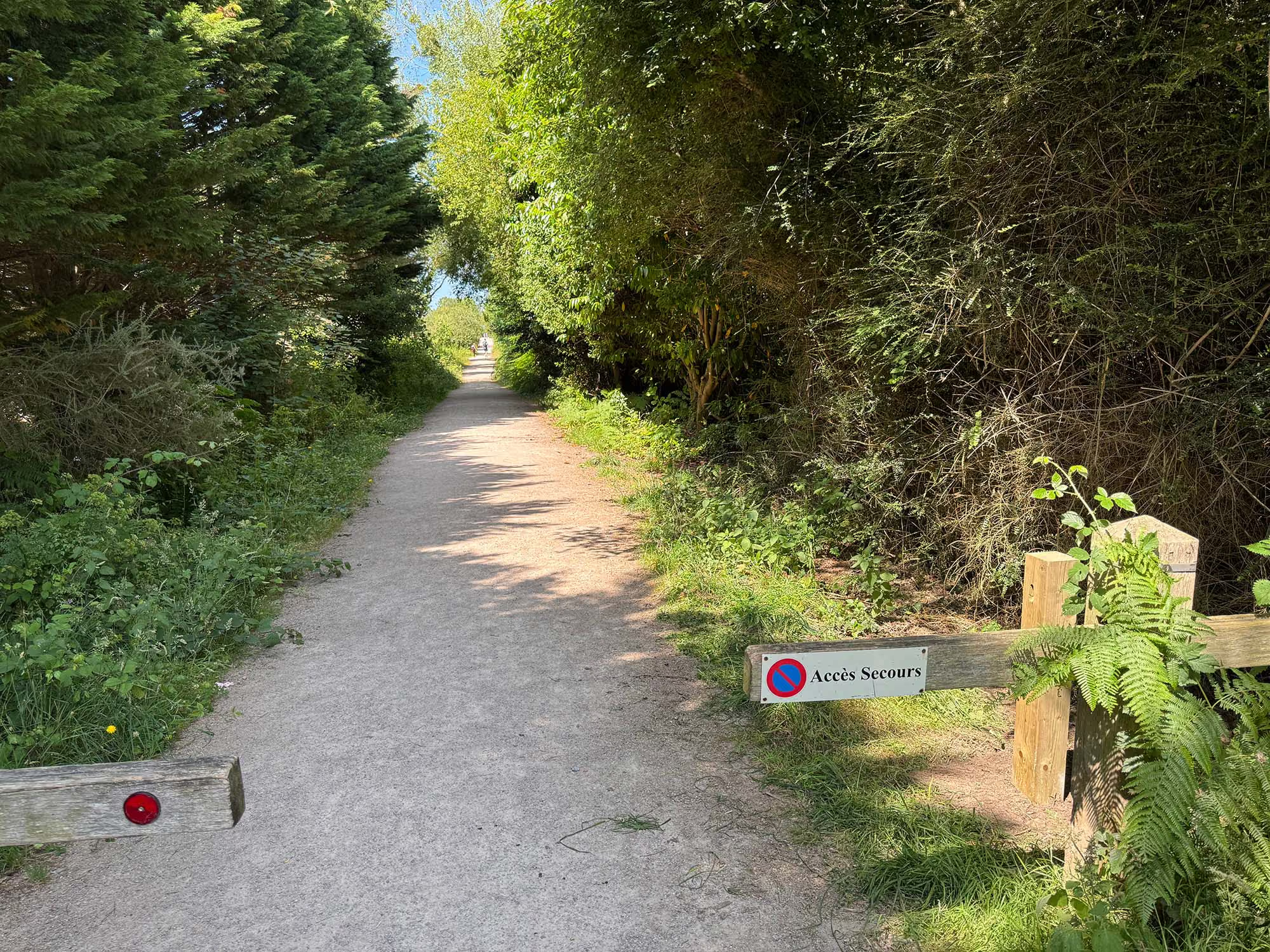
The fixed counters track both pedestrian and cycling activity, with data automatically uploaded via the LTE-M network; the mobile counters rotate from one site to another, according to the questions that need to be answered. Maintaining a historical record on one hand, capturing a trend on the other — the same data, two uses. This choice impacts both the budget and the granularity of the monitoring.
Once collected, the data doesn't just sit in a spreadsheet. Twice a year, it is sent in a report to elected officials and the departmental and regional tourism observatories, who incorporate it into their visitor number reports. On a case-by-case basis, it is also shared with technicians, site managers, and sometimes a local association. The same count, multiple interpretations: this is often where a measurement gains its value.
The Department is not, however, new to visitor counting. Its first devices, from Eco-Compteur — a pioneer in the sector since the 90s — still required manual readings. Over time, a very real constraint shifted the approach.
« Historically, we were equipped with manual reading sensors. We have less staff, so we wanted automatic readings. »
The question, therefore, wasn't about starting to measure, but about choosing who to continue with. Kiomda didn't come through a tender process or a brochure: the name was already circulating, from one local authority to another. In this market, recommendations are still largely passed on from neighbor to neighbor.
« We were aware of Kiomda; we had contacted you. We had contacts with local authorities who had installed Kiomda — a bit by word of mouth. There's the cost, which is a bit lower, and that's what we look at first: it's the taxpayer's wallet. »
Added to this was a specific desire: fewer counters, but ones that could be rotated. Moving a unit rather than having one fixed everywhere. Given what she considers 'substantially equivalent' technical capabilities, it was this combination of reasons — cost, flexibility, French manufacturing, proximity — that tipped the scales. The Château du Guildo, incidentally, was equipped even before the tender process.
Nothing is perfect, however, and the Department doesn't hide that. In the heart of nature, network coverage is sometimes scarce: some days are missing where the signal doesn't transmit — automatic uploading shifts the constraint rather than eliminating it. The rest boils down to a principle Florence Parent articulates without hesitation.
« Transparency and honesty are important. Being close to your client is important. »
Score given: 8 out of 10, « and I might be too demanding ».
The system is still expanding. By 2028, the counters will be extended to the department's cycle paths; the transition to 5G will prompt the renewal of others. « Some counters will stop working, and we will buy more from you. », Florence Parent anticipates. Perhaps the real sign is this: once you start measuring, you never quite go back to estimation.
.avif)
.avif)



.jpg)

.svg)