

English


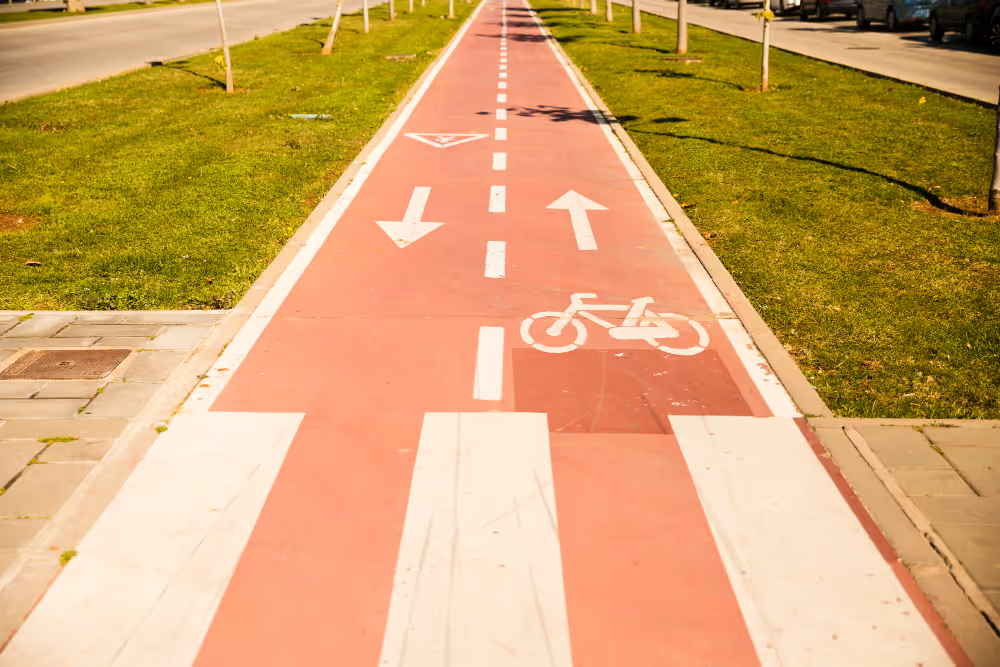
On bike paths, greenways and hiking trails, two main families of sensors compete to measure attendance: buried systems, placed under or in the pavement, and aerial sensors, mounted on a mast or on an element of urban furniture. These two approaches differ profoundly in terms of installation, maintenance, accuracy, and total cost. Choosing between one and the other is not a question of raw performance: it is above all a question of context, field constraints and long-term data strategy. This article compares the two families of solutions to help project owners, communities and space managers to make the most appropriate choice for their project.

When it comes to measuring the use of a bike path or a footpath, the choice of sensor type is often approached from the perspective of technology. It should first be approached from the perspective of installation logic and the long-term vision on data.
Les buried sensors mainly include inductive loops (detecting the passage of metal masses, therefore essentially bicycles), pneumatic tubes (detecting wheel or foot shocks) and piezoelectric sensors embedded in the coating. What these systems have in common is that they are integrated into or under the pavement or pavement, which involves intervention on the ground.
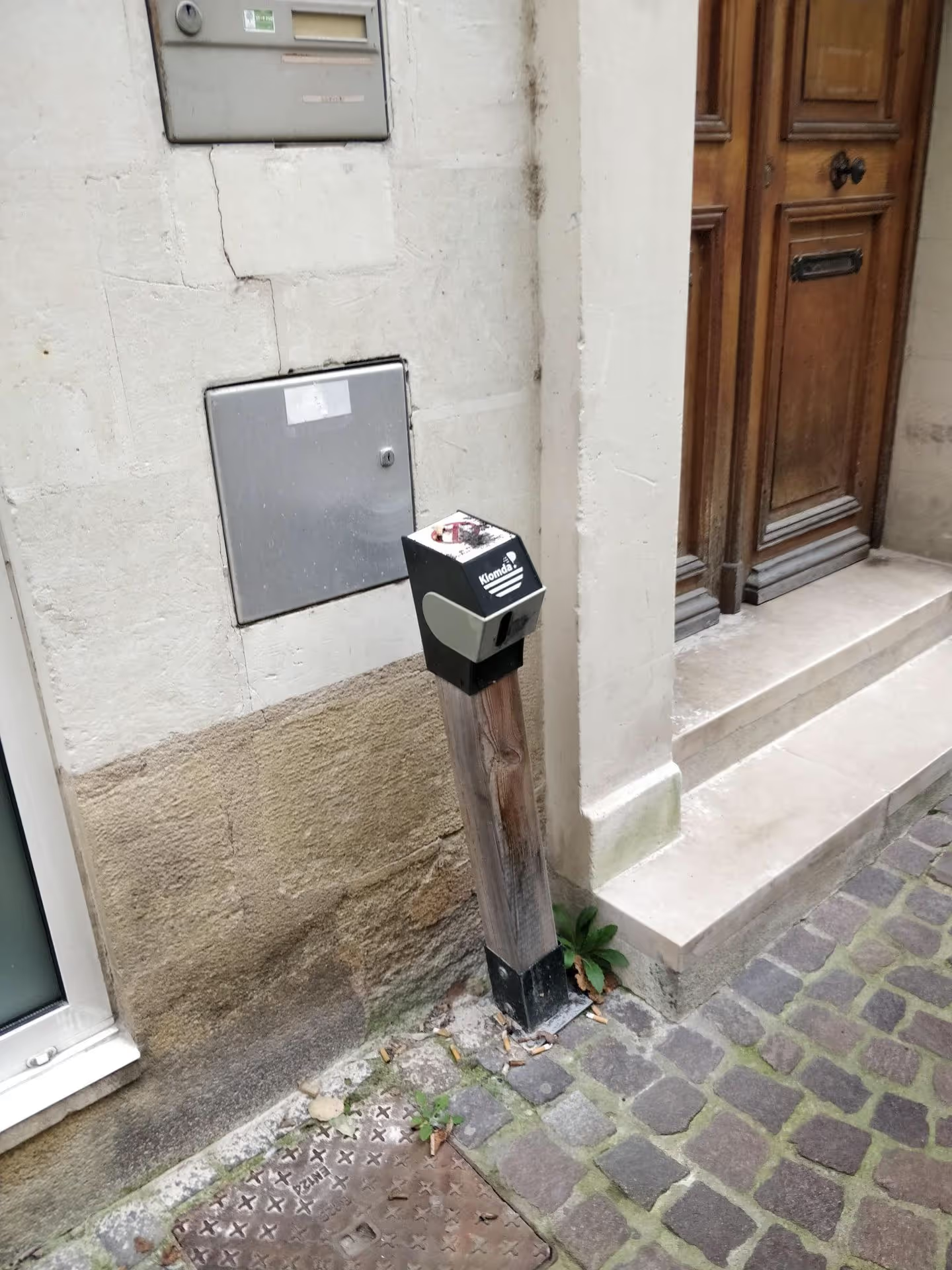
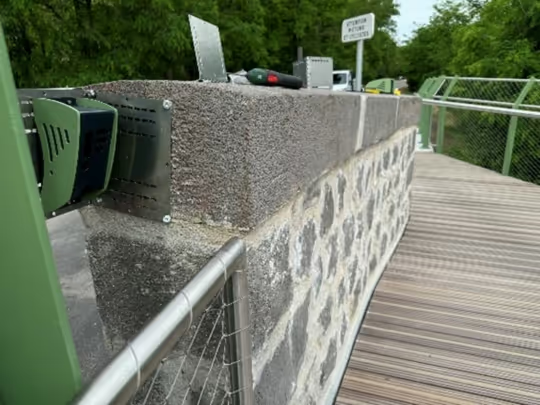
Les aerial sensors — passive infrared, pyroelectric, radar or stereoscopic thermal — are fixed high above the track, generally on a pole, an existing light tower, a furniture structure or a dedicated support. Their installation does not require work on the roadway.
This fundamental distinction between underground intervention and surface mounting conditions almost all the practical differences between the two approaches.
The inductive loop is the oldest counting technology deployed on bike paths. It is based on the detection of the magnetic field disturbed by the passage of a metal mass, which makes it naturally suitable for conventional bicycles with metal frames. It is inexpensive to buy and offers good robustness once installed correctly.
Its limitations are well documented. It does not detect bikes with carbon or very low metal frames, or scooters. It does not distinguish bicycles from light motorcycles on shared lanes. Above all, it is unable to count pedestrians, which makes it unsuitable for greenways or mixed-use paths.
Installing an inductive loop requires cutting the liner, embedding the loop, sealing the channel, and pulling a cable to a meter box. This work involves a temporary stopping of the track and, often, the intervention of a specialized company. In the natural environment, on a stabilized path or on dirt, the inductive loop is useless.
The pneumatic tubes are placed across the track and detect impacts from the wheels (or feet) that crush them. They can be placed semi-permanently or temporarily. Some models allow a distinction according to the time interval between two shocks, thus distinguishing the two wheels of a bike from successive footprints.
Their main disadvantage is their fragility. Exposed to bad weather, UV and repetitive traffic, tubes degrade in a few months to a few years. They are particularly vulnerable to frost and accidental damage. They are especially suitable for short-term temporary measurement campaigns rather than for permanent installations.
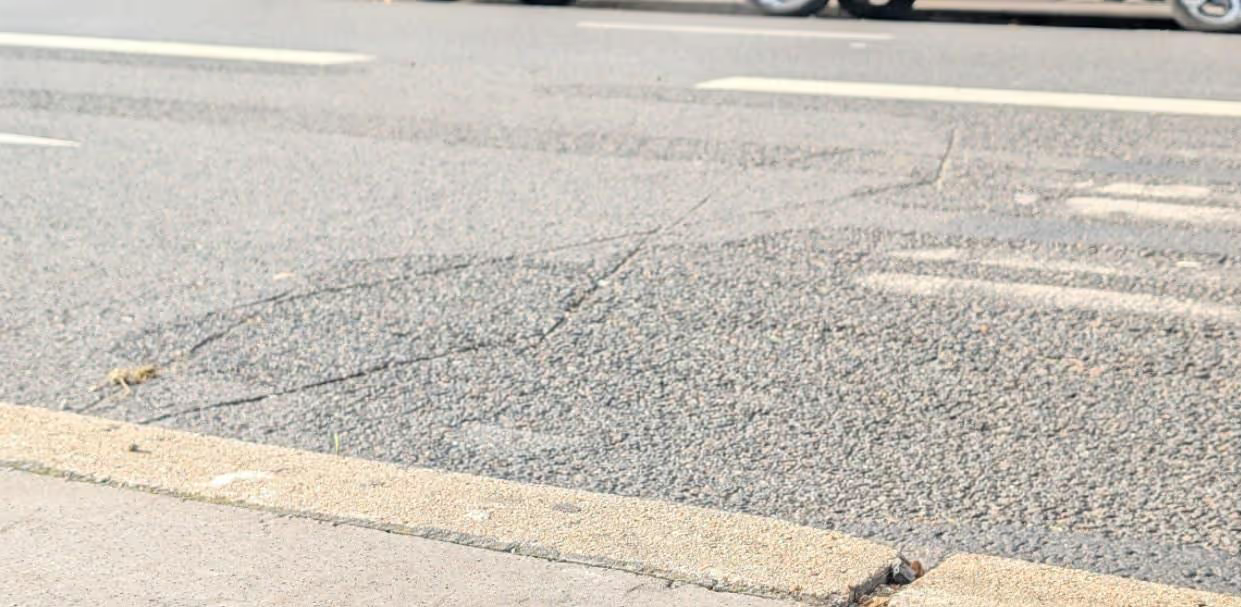
The piezoelectric sensors, embedded in the coating, offer very good detection accuracy. Their installation is the most invasive of all buried solutions: it requires precise milling of the coating, careful embedding and surface recovery. In the event of a failure, maintenance involves new work on the roadway.
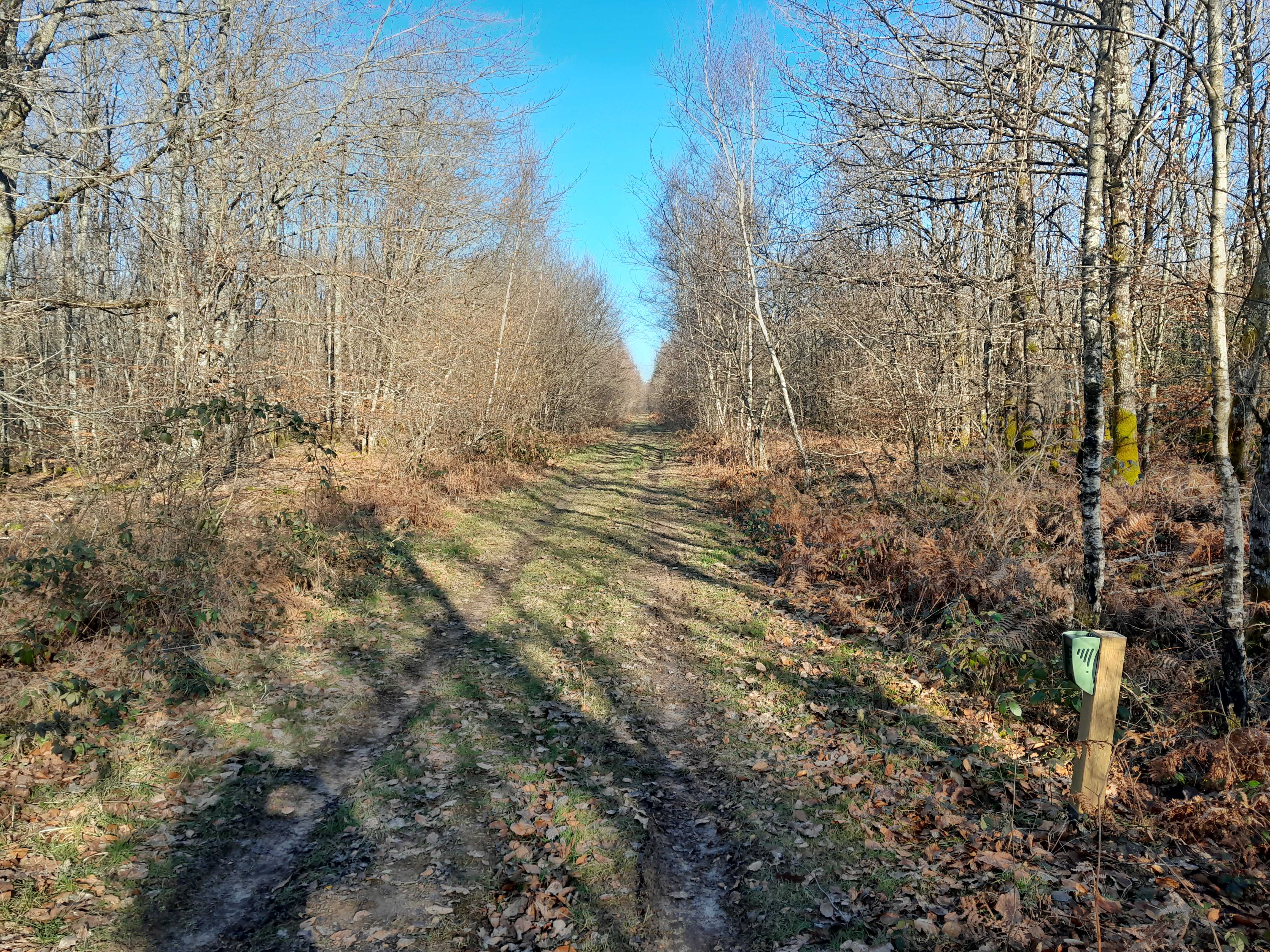
The aerial sensors are fixed high up, above the track, without any contact with the roadway. The installation is limited to fixing the sensor to an existing support or to planting a simple mast, without digging, without cutting, without reworking the surface. On a bike path in a natural environment, on a stabilized path or on a greenway crossing a forest, this characteristic is decisive.
Most modern aerial sensors are autonomous on battery, with solar option. They do not need to be connected to the electrical network, which eliminates a significant cost item and allows them to be installed in areas far from any infrastructure.
On greenways and mixed-use paths, the distinction between pedestrians and cyclists is often a requirement of communities and funders. Separate data makes it possible to size arrangements, assess conflicts of use and justify differentiated interventions.
Les stereoscopic thermal sensors are in the best position to meet this requirement. Their classification algorithm analyzes the size, shape, and speed of the detected signal to distinguish a pedestrian from a cyclist — and sometimes other categories (groups, cargo bikes, scooters). This distinction is native, without image processing, and therefore fully compatible with the RGPD framework.
Thermal aerial sensors are not very sensitive to light, working both at night and during the day. They withstand winter conditions well, with temperature ranges generally between -20 and +60 degrees Celsius for professional models. IP65 or IP67 certifications guarantee watertightness against splashes of water.
Underground sensors, on the other hand, are particularly vulnerable to freeze and thaw cycles. When the ground rises or contracts, buried loops and cables can move, break, or cause false contacts. In mountain areas or in severe winters, this risk factor should be taken very seriously.
The cost comparison between underground and aerial sensors cannot be limited to the purchase price of the equipment. The total cost of ownership over 5 years includes installation, maintenance, the risk of failure and flexibility of use.
For an inductive loop type buried sensor, the installation station (cutting, embedding, wiring, surface recovery) can represent 800 to several thousand euros depending on the type of coating and site conditions. In the event of a failure or deterioration, maintenance involves new work. If the measurement point needs to be moved, the whole operation starts again from scratch.
For an autonomous aerial sensor, the installation consists of hours of qualified work, without equipment or cutting. Maintenance is limited to periodic battery replacement, which can be carried out without specific technical skills. If the sensor needs to be repositioned or redeployed, simply take it apart and reinstall it.
What to remember: On a network of 10 measurement points, the difference in installation costs alone can exceed several tens of thousands of euros in favor of aerial sensors. By integrating maintenance, flexibility and lifespan over 5 years, the trade-off in favor of autonomous solutions is even sharper.
For the vast majority of traffic counting projects on bike paths, greenways, trails and natural areas, the autonomous aerial sensor is the most suitable solution. It combines a work-free installation, energy autonomy, native regulatory compliance and a capacity for multi-flow distinction that buried sensors cannot offer under the same conditions.
Underground sensors remain relevant in very specific contexts: dense urban cycling routes with hard surfaces, single-lane flows without pedestrians, sites where the question of redeployability does not arise. Apart from these conditions, their total cost of ownership and their installation and maintenance constraints make them difficult to justify in the face of modern aerial solutions.
For communities and managers who wish to build an evolving, coherent and usable attendance measurement network over the long term, the scalability and flexibility of the aerial sensor are strategic arguments as important as technical precision.



.jpg)

.svg)